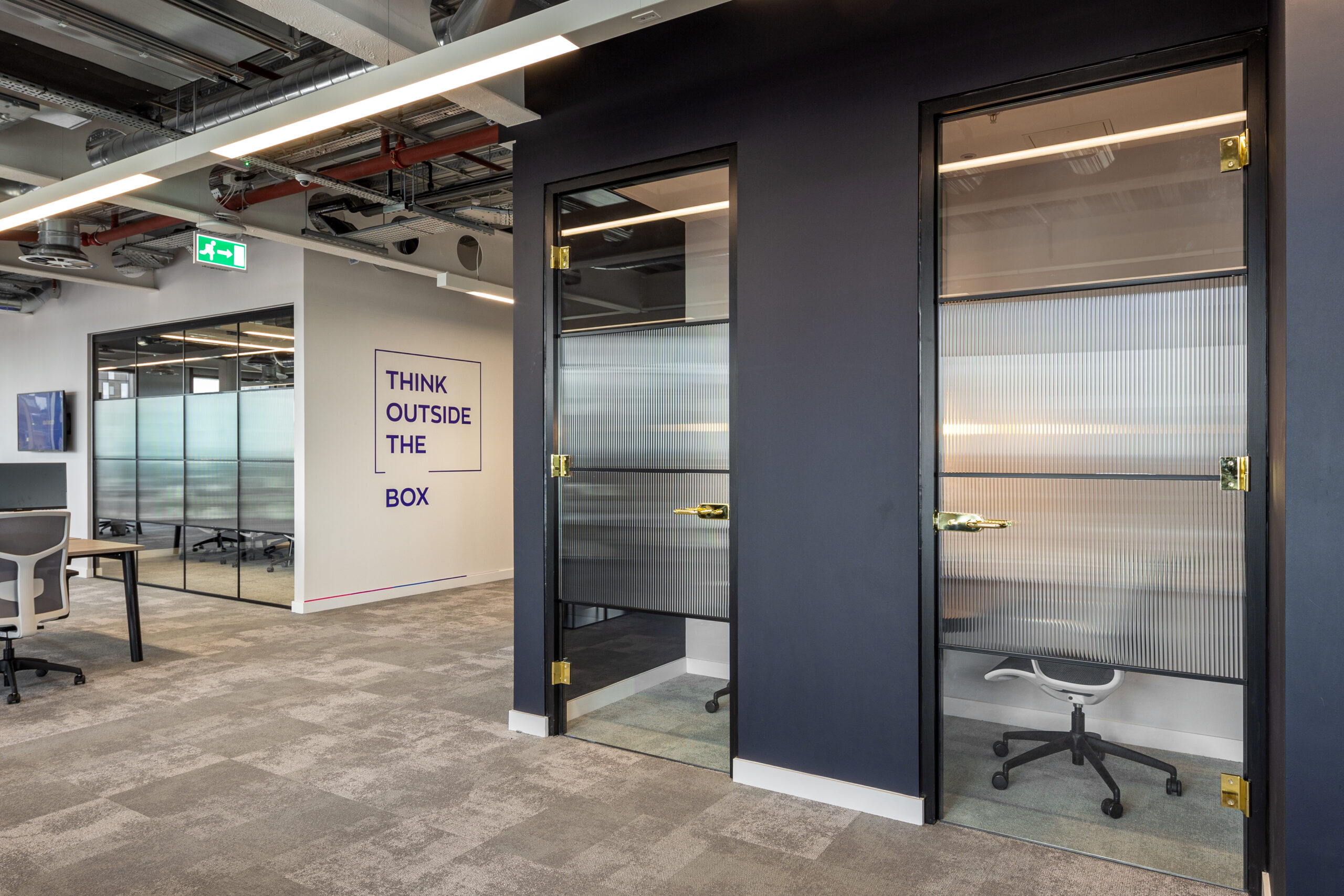
For professional services firms, the office is not simply a place to work. It is where client relationships are built, where fee-earners concentrate on complex and demanding work, and where the culture and standards of the organisation are expressed every day. Getting the fit-out right matters in ways that go well beyond aesthetics.
A turnkey office fit-out service, where one contractor manages the full process from initial brief through to a fitted, ready-to-occupy space, offers a number of advantages for firms who need a predictable process, a clear point of accountability, and a result that reflects the standards their clients expect.
Here are the factors that matter when evaluating turnkey fit-out providers.
1. What Turnkey Office Fit-Out Actually Means
A turnkey fit-out service means the contractor takes responsibility for the entire project: workplace strategy, design, construction, furniture procurement, and handover. The client does not need to manage separate appointments for a design team, a principal contractor, an IT installer, and a furniture supplier. Everything runs through a single team, under a single contract, with one point of contact throughout.
For firms where senior time is valuable and the capacity to manage a complex project is limited, this model simplifies the process considerably. It also removes the risk of gaps or disputes between separately appointed parties, which in a traditionally procured project is one of the most common sources of delay and additional cost.

2. A Single Point of Accountability
When something goes wrong in a traditionally procured fit-out, whether a detail missed between design and construction, a material not available on time, or a programme delay, responsibility can become contested. The designer points to the contractor; the contractor points to the designer. The client is caught in the middle, losing time while the parties resolve it between themselves.
A turnkey model eliminates that dynamic. There is one team, one contract, and one party who owns the outcome from start to finish. If a problem arises, it is resolved internally rather than escalated into a dispute that consumes your time and delays your move-in date. That clarity of accountability is one of the principal reasons professional services firms favour the turnkey model.
3. Starting with Workplace Consultancy
The best turnkey providers do not begin with design. They begin with understanding. Before a single layout is drawn, a thorough workplace consultancy process establishes how the business actually operates, how the team uses the office, what the space needs to support, and what the project is ultimately trying to achieve.
This investment at the start of the process prevents costly revisions later. A brief grounded in real data about your people and their working patterns produces a design that functions as intended, rather than one that looks effective on a render but creates friction in daily use. Ask prospective providers how they approach discovery, and what that process produces.
4. Design That Supports Wellbeing and Productivity
For professional services firms, the quality of the working environment has a measurable bearing on performance. Acoustic design that allows fee-earners to concentrate without interruption. Lighting schemes that reduce eye strain during long working days. A range of settings, from focused workstations and quiet rooms to collaborative areas and client-facing spaces, that supports the different ways the business operates throughout the day.
Wellbeing-focused design is well evidenced in its effect on retention, recruitment, and daily output. A turnkey provider who can demonstrate this thinking in their design approach is bringing genuine value, not simply delivering square footage. Ask to see how they have resolved these requirements in previous projects, and whether they commission post-occupancy evaluations to test whether the design achieved its aims.
5. Sector Experience in Professional Services
6. Multi-Site Delivery Capability
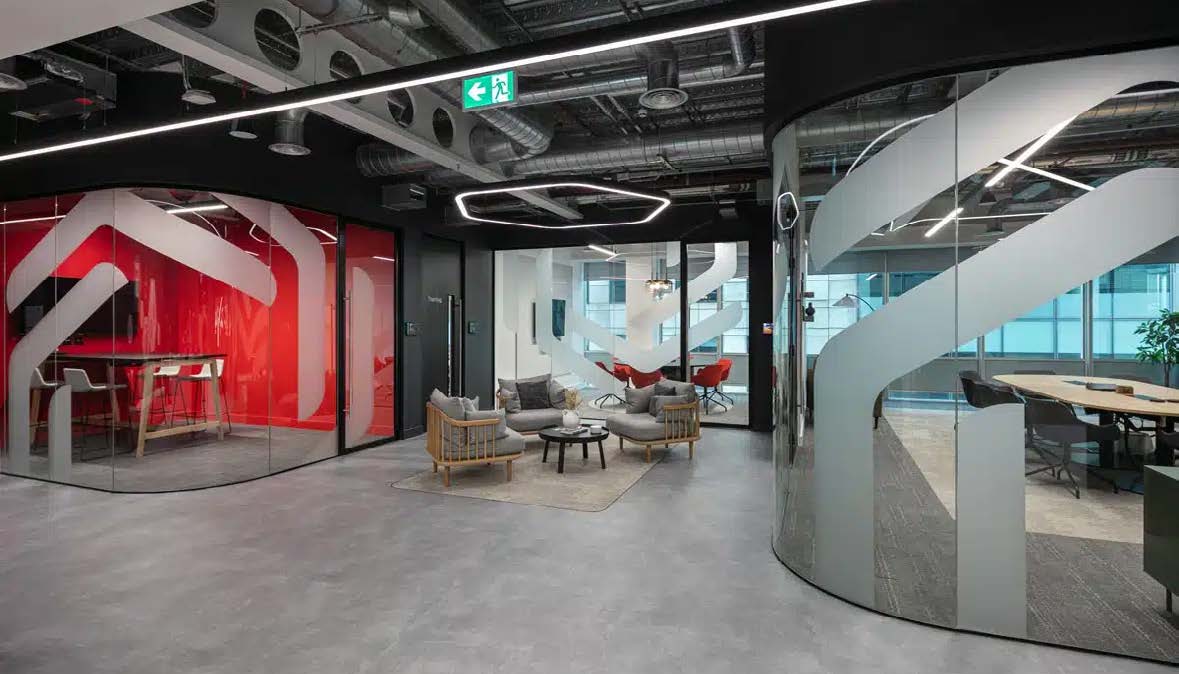
Growing professional services firms frequently operate from more than one location, and many are expanding into new cities as their client base develops. A turnkey provider with genuine multi-site delivery capability can ensure that brand standards, design quality, and ways of working are consistent across every office, not just the flagship.
Multi-site delivery requires robust project management, consistent supply chain relationships, and the capacity to run parallel programmes without compromising quality at any individual location. Ask prospective providers how they have managed multi-site rollouts in the past, what their quality assurance process looks like across locations, and how they ensure a consistent client experience regardless of geography.
7. Programme Management and Communication
The programme is the plan, and the plan only holds if someone is actively managing it. In a turnkey delivery model, the project manager is the central figure, responsible for coordinating design, procurement, construction, and specialist subcontractors, and for communicating progress clearly to the client throughout.
Ask how the provider structures project management, what the reporting cadence looks like, and how decisions are escalated when they need client input. A contractor who can answer these questions clearly and specifically has genuinely considered how to run the project. Vague answers at this stage are usually a reliable indicator of how communication will be handled once work begins on site.
8. Cost Transparency and Early Budget Clarity
Budget surprises late in a fit-out project are almost always the result of an unclear brief or a cost plan that did not fully capture the scope. A transparent turnkey provider will offer an indicative cost range early in the process, set out clearly what is and is not included, and flag any risks to the budget before they become problems rather than after.
Milestone-based payment structures, open-book procurement on significant packages, and a clearly itemised cost plan are all indicators of a contractor who manages budgets with genuine rigour. We provide detailed cost plans early in the process so that professional services firms can plan with confidence rather than with uncertainty. If you are evaluating a turnkey fit-out partner and would like to understand what your project might cost, we are happy to have that conversation.