Office refurbishment is no longer a fallback option. Instead, it is becoming the preferred route for businesses that want to improve performance without the cost and disruption of a full relocation.
For many organisations, the logic is clear. Existing offices often sit in strong locations, close to staff, clients and transport links. However, the space itself may no longer reflect how people work today. Layouts can feel outdated, meeting space may be limited, and finishes or building services may no longer support modern expectations. As a result, refurbishment offers a practical way to modernise the workplace while keeping the benefits of an established address. This shift also fits with the wider market direction, as refurbishment is increasingly viewed as a strategic move rather than a cosmetic one.
Why refurbishment is overtaking new office moves
Relocation still has its place. Nevertheless, it is no longer the automatic answer when a workplace feels tired or no longer supports the business. Moving premises involves far more than finding a new building. It usually brings higher costs, legal commitments, fit-out spend, operational disruption and a period of adjustment for staff.
By contrast, refurbishment allows businesses to retain what already works while improving what no longer does. That may include rethinking the layout, upgrading finishes, improving lighting, refreshing breakout areas, or introducing new spaces for hybrid working. Therefore, instead of starting again from scratch, businesses can build on existing value.
There is also a speed advantage. A well-planned refurbishment can often move faster than a full relocation because it removes part of the search, acquisition and move-management process. In many cases, works can even be phased to reduce disruption and support business continuity. For companies under pressure to improve the workplace quickly, that makes refurbishment an attractive option.

Transforming existing buildings to modern standards
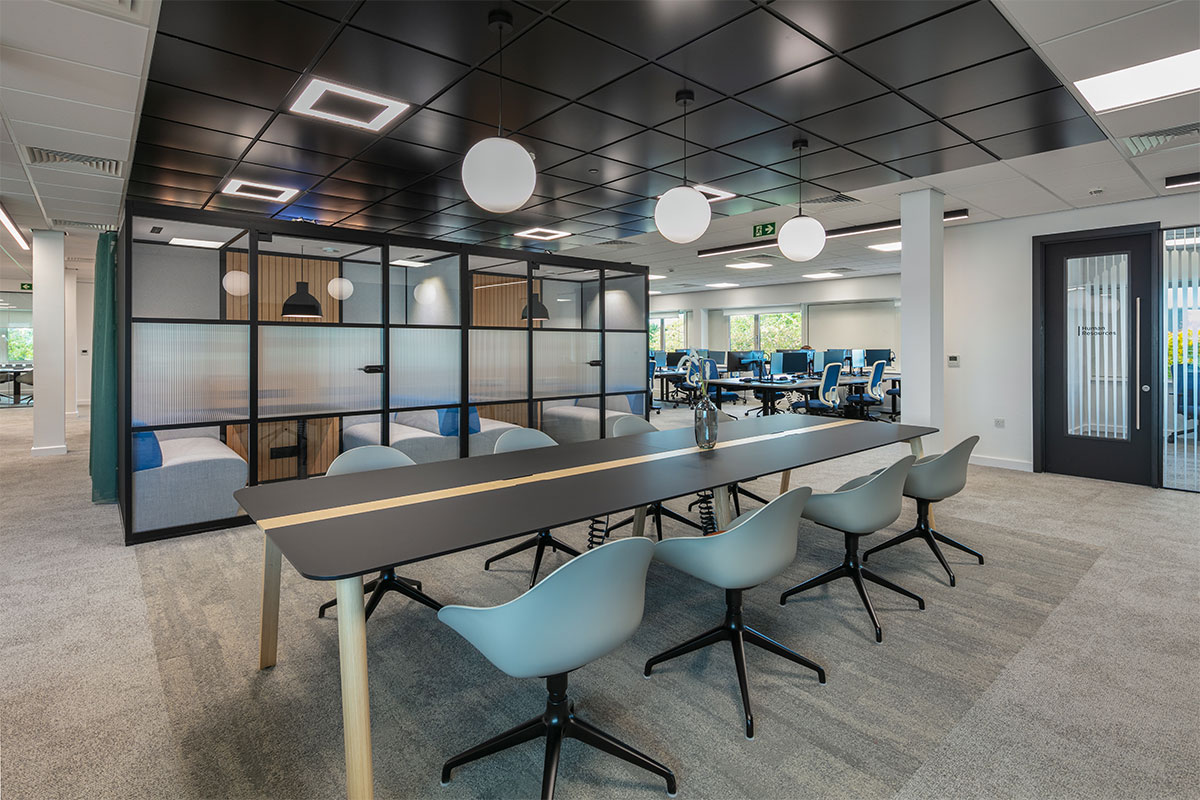
One of the biggest reasons refurbishment is rising is that older buildings can now be reimagined far more effectively than many businesses expect. A dated office does not need to stay dated. With the right workplace strategy, design thinking and technical delivery, existing space can be transformed into a modern, high-performing environment.
This is about more than appearance. Today’s refurbishment projects often focus on how the workplace actually functions day to day. That means creating the right balance of collaboration areas, focus settings, meeting rooms and social spaces. It can also mean improving accessibility, upgrading technology integration, and making better use of underused square footage.
In addition, building services are often part of the conversation. Better lighting, ventilation, acoustics and energy performance all contribute to a more comfortable and efficient workplace. As expectations have changed, businesses now want offices that support employee experience, reflect their brand and encourage people to use the space with purpose. Refurbishment makes that possible without needing to abandon the building entirely.
The commercial advantages of upgrading space
From a commercial perspective, refurbishment can deliver strong value. First, it can be more cost-effective than relocating, especially when the current location still works well. Secondly, it gives businesses more control over what they invest in. Rather than paying for a complete move, they can focus budget on the changes that will have the greatest impact.
That might include improving space efficiency, supporting a hybrid model, refreshing client-facing areas or creating a stronger sense of identity throughout the office. As a result, the workplace becomes more aligned with current business goals instead of being shaped by past needs.
Refurbishment can also help protect productivity. When teams work in spaces that feel considered, comfortable and fit for purpose, the office is more likely to support performance. Moreover, a refreshed environment can improve client perception, support staff morale and strengthen confidence in the business. These are not superficial gains. They are part of creating a workplace that works harder for the organisation every day.

The environmental case for refurbishment
Sustainability is another major driver behind the rise of refurbishment. More businesses want to reduce waste, cut embodied carbon and make smarter long-term decisions about their real estate. In that context, upgrading an existing office can be a far more responsible route than relocating and starting again.
Refurbishment creates opportunities to retain useful elements, reduce unnecessary strip-out and introduce lower-impact materials and systems. It can also improve operational efficiency through upgrades to lighting, HVAC and controls. Consequently, the office not only performs better for the people using it, but also supports wider environmental goals.
Importantly, sustainability is no longer treated as a separate conversation. It is now closely linked to commercial performance, reputation and future readiness. Businesses want workplaces that meet modern standards while using resources more intelligently. Refurbishment supports that shift by combining practical improvement with measurable long-term value.
Why this trend will continue
The rise of refurbishment reflects a broader change in how businesses think about office space. The goal is no longer simply to occupy somewhere new. Instead, it is to create a workplace that supports people, performance and flexibility in the right location and at the right cost.
For many organisations, the smartest move is not to leave. It is to rethink what they already have.
That is why refurbishment is becoming such an important part of office fit-out strategy. It offers a route to modern standards, stronger sustainability performance and better commercial outcomes, while avoiding the disruption of an unnecessary move. When approached strategically, refurbishment does not mean compromising. On the contrary, it can be the most effective way to deliver a workplace that is ready for what comes next.
If you are considering an office refurbishment, we can help you create a workspace that feels modern, practical and built around your business needs. Get in touch with ADT Workplace to discuss your project.