When people think about office design, they often picture desks, meeting rooms, finishes and furniture. Yet one of the most important parts of workplace performance is often less visible. It is the way people move through the space each day.
From the moment someone enters the office, they begin a series of small journeys. They arrive at reception, walk to their workstation, head to a meeting room, visit a breakout area, collect printing, make a drink and move between focused and collaborative tasks. Because of this, good office design should never focus only on where people sit. It should also consider how they move, how they interact and how easily they can navigate the environment around them.
We believe workplace flow is one of the most overlooked aspects of office design. A space may look impressive on paper, but if movement feels awkward, congested or unclear, the day-to-day experience quickly suffers. By contrast, when circulation feels natural, the workplace becomes easier to use, more comfortable to work in and better aligned with how teams actually operate.
Why workplace flow matters
Workplace flow is about more than corridors and walkways. It influences how efficiently people move, how often they collaborate and how much disruption they experience during the working day. A well-planned office creates clear pathways between key destinations and helps people move through the space without unnecessary obstacles or distractions.
That matters because poor flow creates friction. Teams can be interrupted by through-traffic. Shared spaces can become noisy bottlenecks. Meeting rooms can feel disconnected from the people who need them most. Even small planning issues, when repeated throughout the day, can affect focus, comfort and productivity.
This is why we always look at how a workplace functions in real use, not just how it looks in a layout. Our design approach is shaped by workflow, business needs and future use, because the most effective workplaces support both movement and performance. Our existing consultancy and office design content reflects that wider view, linking layout decisions to productivity, wellbeing and long-term flexibility.

Start with the employee journey
A better office layout begins with understanding how people use the space from arrival to departure. Before making decisions about zoning and furniture placement, it is worth mapping the employee journey.
This means looking at how people enter the workplace, where they pause, which routes they use most, where teams naturally gather and where delays or distractions occur. It also means noticing the pressure points that are easy to miss in a floor plan, such as queues near lockers, congestion around printers or tea points, and routes that cut directly through quiet work areas.
When we map these journeys, we can identify friction points early. That gives us the chance to solve them through smarter planning rather than leaving them to affect the daily experience later on. It also helps us understand whether a space is supporting the right behaviours, whether that is focused work, informal collaboration or smoother movement between departments.
Design routes that feel natural
Once movement patterns are understood, circulation routes can be designed more deliberately. The goal is not simply to add more space for walking. It is to make movement feel obvious and intuitive.
People should be able to understand the space without constantly stopping to work out where they need to go. Main routes should connect the most frequently used destinations clearly, while quieter routes should support smaller movements around work settings and support areas. Government workplace design guidance also recognises the importance of allowing sufficient circulation space within office layouts, rather than treating movement as an afterthought.
However, good circulation is not only about width. It is also about logic. If the kitchen sits beside a focus zone, noise may travel too easily. If meeting rooms are placed too far from the teams that use them most, movement becomes inefficient. If staff have to cut through busy collaboration areas to reach quieter work settings, disruption becomes part of the everyday routine.
A strong layout supports the natural rhythm of the working day. It helps people move quickly where they need efficiency and slow down where interaction is useful.

Place shared spaces with purpose
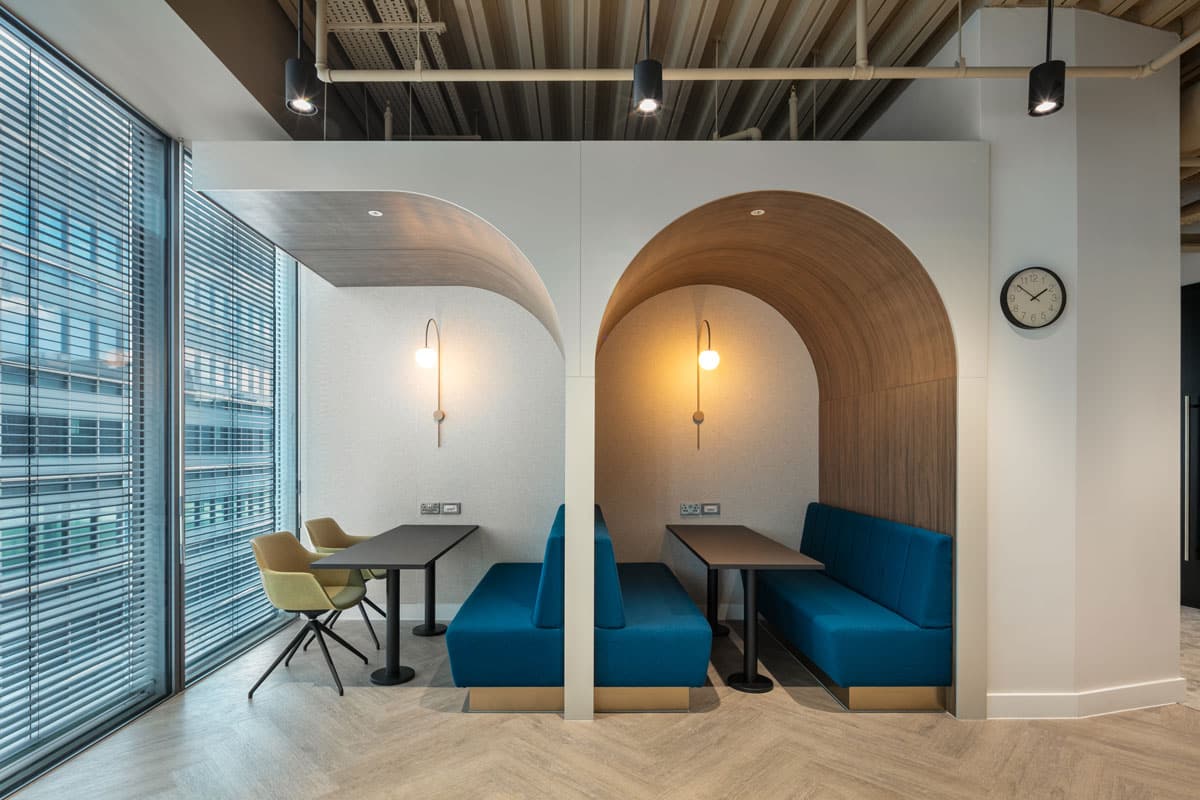
The position of key spaces has a direct impact on how the office feels and functions. Breakout areas, meeting rooms, touchdown points and support spaces should not be dropped into a plan wherever room is available. Their placement should reflect how people actually work.
For example, shared amenities can encourage spontaneous interaction when they sit in the right part of the layout. Yet the same spaces can create noise and interruption if they are positioned too close to desks used for concentrated work. This balance matters because office design influences satisfaction, workplace experience and overall performance. Research into office concepts and psychosocial work environments continues to show links between workspace design, satisfaction and employee outcomes.
The aim is not to eliminate movement or interaction. It is to shape it properly. We want collaboration to happen naturally, but we also want people to protect focus when they need to.
Make navigation intuitive
A workplace should be easy for everyone to understand and use. That is why navigation and accessibility need to be built into the design from the start.
We design workplaces with step-free routes, wide corridors, tactile signage and carefully placed furniture to support clearer movement throughout the office. Clear sightlines, recognisable landmarks and well-defined zones also help people navigate without relying on excessive signage.
This is important for accessibility, but it is equally important for confidence and ease of use. When a workplace feels intuitive, people settle into it more quickly. Visitors find their way more easily. Teams move with less hesitation. The result is a workplace that feels more coherent, more welcoming and more effective in daily use. Our wayfinding content reflects this same principle, showing that intuitive navigation supports productivity, accessibility and the overall workplace experience.

A successful office should never be judged only by how it looks in a static plan. It should be judged by how it performs in motion.
That is why we look beyond desk counts and zoning diagrams. We think about journeys, touchpoints, circulation and behaviour. We consider where movement should be quick, where it should slow down and where it can create meaningful opportunities for connection.
When flow is planned well, the workplace feels easier to use. It supports productivity, reduces friction and creates a better experience for everyone using the space. That hidden journey through the office matters more than many businesses realise. Once it is designed properly, the difference can be felt every day.A better workplace works in motion