Sustainability is now a key part of modern office fit outs. However, many businesses still face a common challenge. They want to reduce environmental impact, support ESG goals and create healthier workplaces, but they also need to manage budget, programme and commercial risk.
As a result, sustainable office design should never be treated as a separate add-on. Instead, it should be built into project decisions from the start. When sustainability is considered early, businesses can make smarter choices around materials, reuse, energy performance and long-term value.
The aim is not to create the most expensive specification possible. In fact, the best approach is often about finding the right balance. With careful planning, sustainable decisions can support both environmental goals and commercial outcomes.
Why sustainability needs early planning
The biggest sustainability gains often happen before the design is finalised. At this stage, there is more room to influence layout, material selection, furniture strategy and building services.
For example, early decisions can help identify which existing elements can be reused. This may include flooring, ceilings, partitions, furniture or mechanical systems. Therefore, a refurbishment-first approach can reduce waste, limit unnecessary spend and lower the carbon impact of a project.
In contrast, late changes are often more expensive. They can affect lead times, procurement and installation. So, by reviewing sustainability from the beginning, businesses can avoid costly redesigns and make informed choices.
Where sustainable choices deliver the most value
Not every sustainable option needs to carry a high upfront cost. In many cases, the best value comes from practical choices that improve performance over time.
Energy-efficient lighting is a good example. Although LED systems may require investment, they can reduce operational energy use and support lower running costs. Similarly, efficient heating, cooling and ventilation systems can improve comfort while reducing unnecessary energy waste.
Material choices also matter. Locally sourced, recycled and reclaimed materials can reduce transport impact and support a more responsible supply chain. However, the decision should still be based on durability, suitability and lifecycle value.
In other words, the cheapest material is not always the most cost-effective. If it wears quickly or needs replacing sooner, the long-term impact may be higher.
The role of refurbishment-first thinking
A full strip-out is not always the best route. Sometimes, the most sustainable and cost-effective decision is to work with what is already there.
Refurbishment-first thinking helps businesses assess what can be retained, adapted or upgraded. This may include reusing existing furniture, refreshing finishes or adapting current layouts. As a result, less waste goes to landfill and fewer new materials are needed.
This approach can also reduce disruption. If existing systems and structures are suitable, the project may move more efficiently through design and delivery. However, each space needs to be assessed properly. Some elements may no longer meet performance, safety or design requirements, so they must be replaced.
The key is to make decisions based on evidence, not assumptions.
When to invest in higher-spec sustainable solutions
Some sustainable choices require greater upfront investment. However, they can still offer strong commercial value when they support long-term performance.
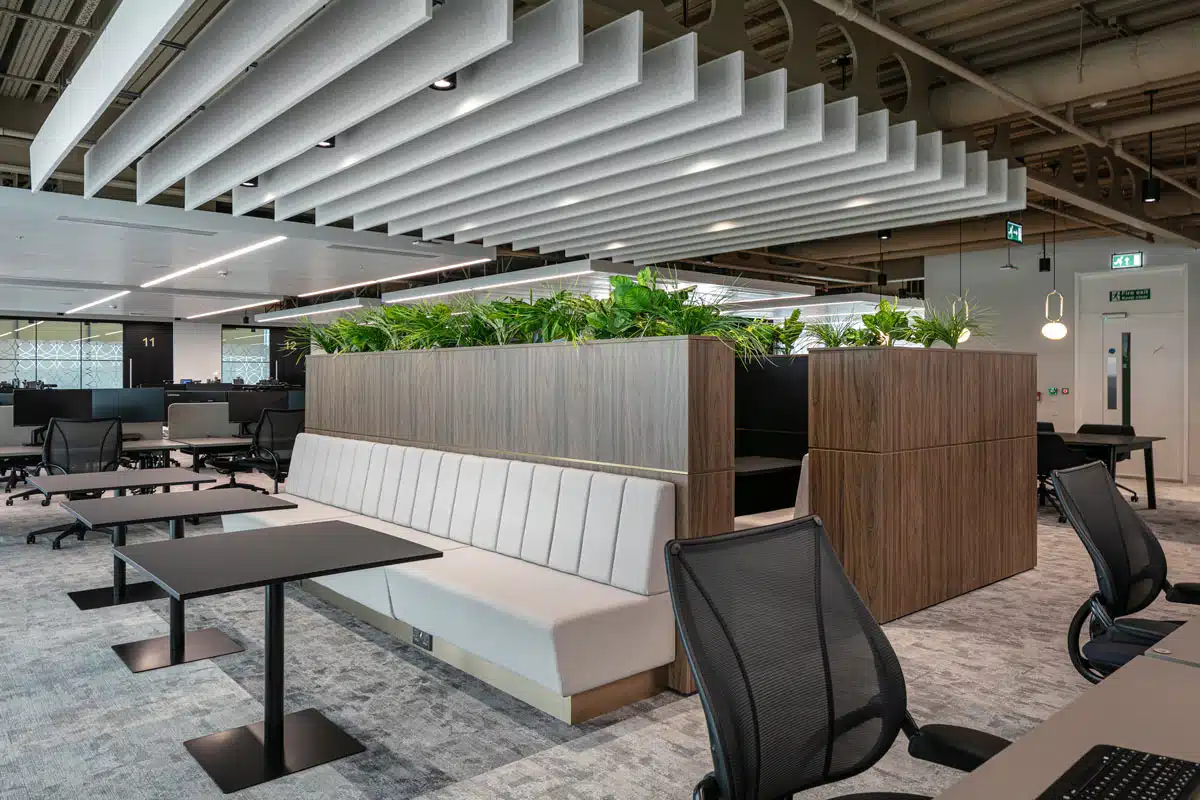
For example, higher-quality finishes may last longer and reduce future replacement costs. Better acoustic products can support focus and wellbeing. Meanwhile, improved ventilation and natural light can create a healthier workplace experience.
There may also be cases where accreditations, such as BREEAM or SKA, support wider business goals. These can help demonstrate environmental responsibility, strengthen ESG reporting and improve credibility with employees, clients and stakeholders.
However, certification should be considered alongside the wider project brief. For some businesses, formal accreditation may be valuable. For others, the focus may be on measurable improvements without pursuing a specific rating.

Balancing cost, programme and sustainability
Every office fit out involves trade-offs. Budget, timescales, design ambitions and sustainability goals all need to work together.
That is why clear priorities are essential. Some businesses may focus on reducing embodied carbon. Others may want to improve energy efficiency, reduce waste or create a healthier workplace. Once the priorities are agreed, the design and build process becomes more focused.
For example, if programme speed is critical, long-lead sustainable materials may not be suitable. However, alternative products may still offer strong environmental performance. Likewise, if budget is fixed, the focus may shift towards reuse, efficient procurement and targeted upgrades.
Sustainability should be realistic, not idealistic. A commercially viable plan is more likely to be delivered successfully.
How sustainability supports ESG goals
A successful sustainable office fit out should support people, performance and the planet. However, it must also make commercial sense.
We help clients make practical decisions that balance sustainability with budget, programme and long-term value. Through early planning, responsible material choices and refurbishment-led thinking, we create workplaces that reduce impact without losing sight of business needs.
Ultimately, sustainability works best when it is built into the whole project journey. With the right approach, businesses can create efficient, healthy and future-ready workplaces that support ESG goals and deliver lasting value.Creating sustainable workplaces that work commercially