Manchester’s office market is one of the most active outside London, and that creates a particular tension for growing businesses: do you move into new space to meet your ambitions, or do you invest in improving what you already have? For many organisations, the answer is increasingly the latter. A well-planned refurbishment can transform how a workplace performs, without the disruption, cost, and risk that relocation brings.
This guide is written for Manchester businesses at the point of that decision. It covers when refurbishment makes more sense than moving, what it typically costs, how long it takes, and what shapes your options in Manchester’s specific building stock. If you’ve already decided to refurbish and want to understand the process in detail, our commercial office refurbishment guide covers the full delivery sequence.
If you’re weighing up a fit out of new space instead, the Manchester office fit out guide explains what that involves and what to budget for it.
Why Manchester Businesses Are Choosing Refurbishment
The Manchester office market has changed significantly over the past five years. Grade A supply in the city centre has grown, vacancy has shifted, and rents have risen in the most sought-after buildings. At the same time, many businesses occupy space they took on before hybrid working became the norm: offices built around headcount assumptions that no longer hold, with layouts that don’t reflect how people actually use the building.
Refurbishment addresses both problems. It lets you reconfigure a space around how your organisation works today (more collaboration, less fixed desking, better acoustic zones, improved technology infrastructure) without triggering a lease event or a move. In a market where relocating often means a higher rent, a longer term, and significant fit out cost on top, improving what you already have is frequently the more commercial decision.
Manchester buildings also tend to reward refurbishment. Many of the city’s older commercial floors, particularly in the Northern Quarter, around Piccadilly, and in areas like Ancoats and Salford, offer good bones: generous floorplates, high ceilings, strong natural light. The right refurbishment can bring these spaces up to a standard that matches or exceeds newer developments at a fraction of the cost of moving into them.
Refurbishment vs Fit Out: Which Do You Actually Need?
The two terms are often used interchangeably, but they describe different things. Understanding the distinction helps you brief accurately and budget more reliably.
A refurbishment works with your existing space. It improves, reconfigures, and upgrades what’s there: layout changes, new finishes, better lighting, mechanical and electrical improvements, furniture replacement, and acoustic treatment. The building envelope stays the same. The goal is to make the space work better for how you operate now.
A fit out typically refers to fitting out a new or vacant space, either a shell building being taken from Cat A to a finished workplace, or an empty floor in an existing building. It tends to involve more extensive mechanical and electrical work because there’s less existing infrastructure to retain.
In practice, a major refurbishment and a Cat B fit out can look similar in scope. The key question is whether you’re starting from scratch in a new space or improving the one you’re already in. Our office space calculator can help you understand whether your current footprint is the right size before you commit to either route.
When Refurbishment Makes More Sense Than Moving
There’s rarely a single answer, but several factors tend to point clearly towards refurbishment over relocation.
Your location works. If your building is well-connected, your team is settled, and clients know where you are, disrupting all of that has a real cost (not just financially but in terms of team retention and operational continuity). A refurbishment lets you keep what’s working while fixing what isn’t.
Your lease has runway. Refurbishment makes most sense when you have a meaningful term left on your lease, typically three years or more. A major investment with only 18 months to go is harder to justify unless there’s a strong likelihood of renewal.
The space itself is salvageable. Not every building is worth investing in. If the structure is inflexible, the services are at end of life, or the building’s fundamental specification is too far below what your people expect, relocation may be the better long-term call. A proper condition survey and space audit, part of any good workplace consultancy engagement, will tell you honestly where the building stands. Our Stay vs Go Office Guide walks through this decision in detail.
You want to avoid disruption. Moving office is a significant operational undertaking. Even a well-managed relocation takes months of management time, creates uncertainty for staff, and introduces technology and operational risks. A phased refurbishment, keeping people working in the building throughout, is often far less disruptive than the alternative.

What Does an Office Refurbishment in Manchester Cost?
Cost is the question most businesses want answered first, and it’s the hardest one to pin down without understanding the scope. Refurbishment costs vary significantly depending on the condition of the existing space, the specification of new finishes, the extent of mechanical and electrical work, and whether any structural changes are involved.
As a guide based on our project experience, a Cat B office fit out, which gives you a comparable sense of what a full refurbishment can cost, runs from £45 to £65 per square foot at a low specification, £65 to £90 per square foot at mid-range, and £90 to £130 or more per square foot for a high-specification scheme with significant bespoke design and premium finishes. These are UK-wide typical ranges.
A refurbishment that retains and upgrades existing elements, rather than stripping out and starting again, can come in below a full Cat B fit out cost. The saving depends on what’s worth keeping. Good mechanical and electrical infrastructure that’s been well maintained, solid existing partitions in the right locations, and usable flooring all reduce the scope and the cost.
The biggest variable is often what you find once work starts. Older Manchester buildings in particular can produce surprises: hidden services, asbestos in some older fabric, structural elements that complicate the planned layout. Proper surveys before design is finalised are essential, and a realistic contingency (typically 10 to 15% of construction cost) is not optional.
How Long Does a Manchester Office Refurbishment Take?
Programme depends heavily on scale and complexity. A light refresh of finishes, furniture, and lighting in a space that remains occupied can be delivered in a few weeks. A full refurbishment of a 10,000 sq ft floor (strip out, new layout, mechanical and electrical works, new ceilings and flooring, joinery, furniture, and technology) typically runs to 10 to 14 weeks on site.
From initial briefing to handover, allow four to six months for a project of that scale when design, surveys, planning, and procurement time are included. This is often where businesses underestimate what’s involved. Starting the process at least six months before you need the space to be operational is the most reliable way to avoid a programme squeeze.
Phasing can help where a full closure isn’t possible. We have delivered refurbishments across occupied Manchester buildings, working floor by floor or in sections, so that teams continue to function normally throughout. It adds some complexity to the programme, but it removes the operational risk of taking a business offline for weeks.
What Shapes Your Options in Manchester Buildings
Manchester’s commercial stock is varied, and the building you’re in affects what’s achievable. The newer Grade A buildings in Spinningfields, NOMA, and around Piccadilly offer flexible floorplates, modern services, and landlords who are generally open to negotiation on contribution to refurbishment costs, particularly at lease renewal. These buildings often have a higher base specification, which means a refurbishment is more likely to be about reconfiguring layout and refreshing finishes than replacing fundamental services.
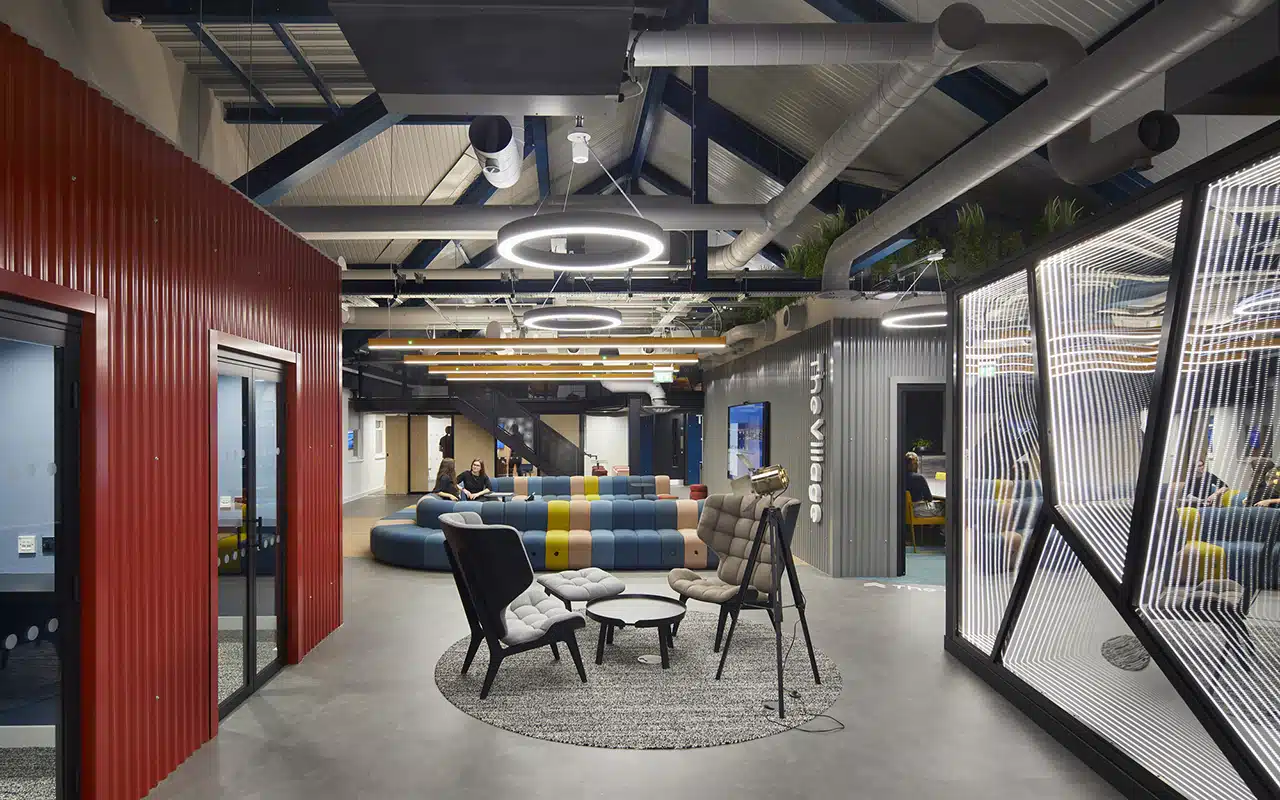
Older buildings in the Northern Quarter, Ancoats, and parts of Salford present a different picture. Many are converted industrial buildings with character but variable services. They often require more investigation before pricing is fixed, and the scope of mechanical and electrical work can be significant. The upside is that these buildings frequently have structural attributes, exposed brickwork, timber beams, generous ceiling heights, that create excellent workplaces when the right design approach is applied.
Landlord contribution is also worth exploring before you commit your own budget. At lease renewal or lease extension events, many Manchester landlords will consider a rent-free period or a capital contribution towards refurbishment costs. This is worth negotiating before any design work begins, and ideally before heads of terms are agreed.
Making the Decision
The businesses that get the most from a refurbishment are usually the ones that start with a clear view of what they’re trying to achieve, not just aesthetically, but in terms of how the space supports the way the organisation works. Is the goal to get more people in more often? To reduce the footprint? To make the office feel like a place worth travelling to? The brief shapes everything that follows.
Our office refurbishment services team works with Manchester businesses from initial strategy through to delivery. We can help you assess whether refurbishment is the right route, scope what’s involved, and deliver it with minimal disruption to your operations. If you’d like to see what we’ve done for other organisations, our recent work includes several Manchester refurbishment projects across a range of building types and scales.
Ready to improve your Manchester office?
If you’re approaching a lease event, thinking about how your office needs to change, or simply want to understand what a refurbishment could achieve, our team is happy to start with a conversation.