If you are looking at commercial office space in the UK, you will almost certainly come across the term Cat A fit out. It is one of the most commonly used phrases in commercial property, and one of the most misunderstood. Knowing what Cat A actually means, and what it does not include, can save you from some costly surprises when you are planning your next move or refurbishment.
A Cat A fit out refers to the level of finish typically provided by a landlord or developer before a tenant takes occupation. It prepares the basic fabric of the building for use, but it does not personalise or furnish the space. Think of it as the foundation on which your business environment will be built.
In this guide, we explain exactly what a Cat A fit out covers, who it is designed for, and what typically happens once it is complete.
What Does a Cat A Fit Out Include?
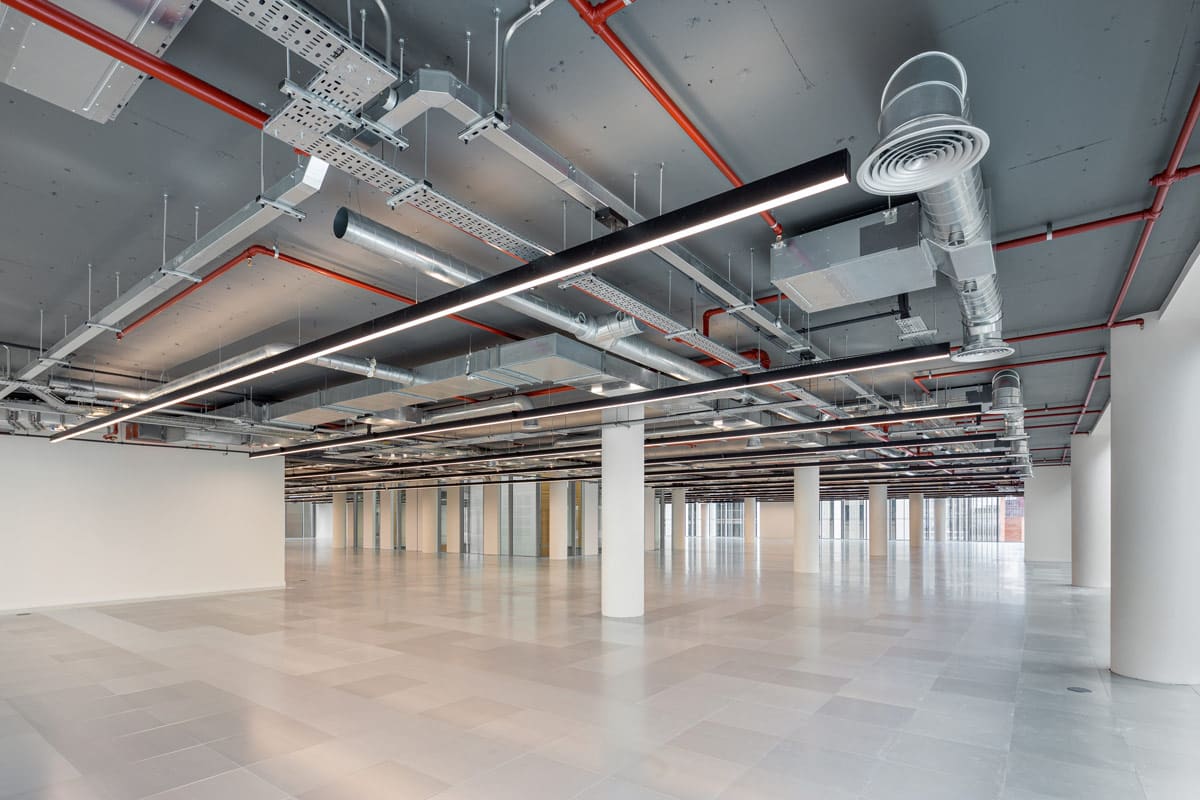
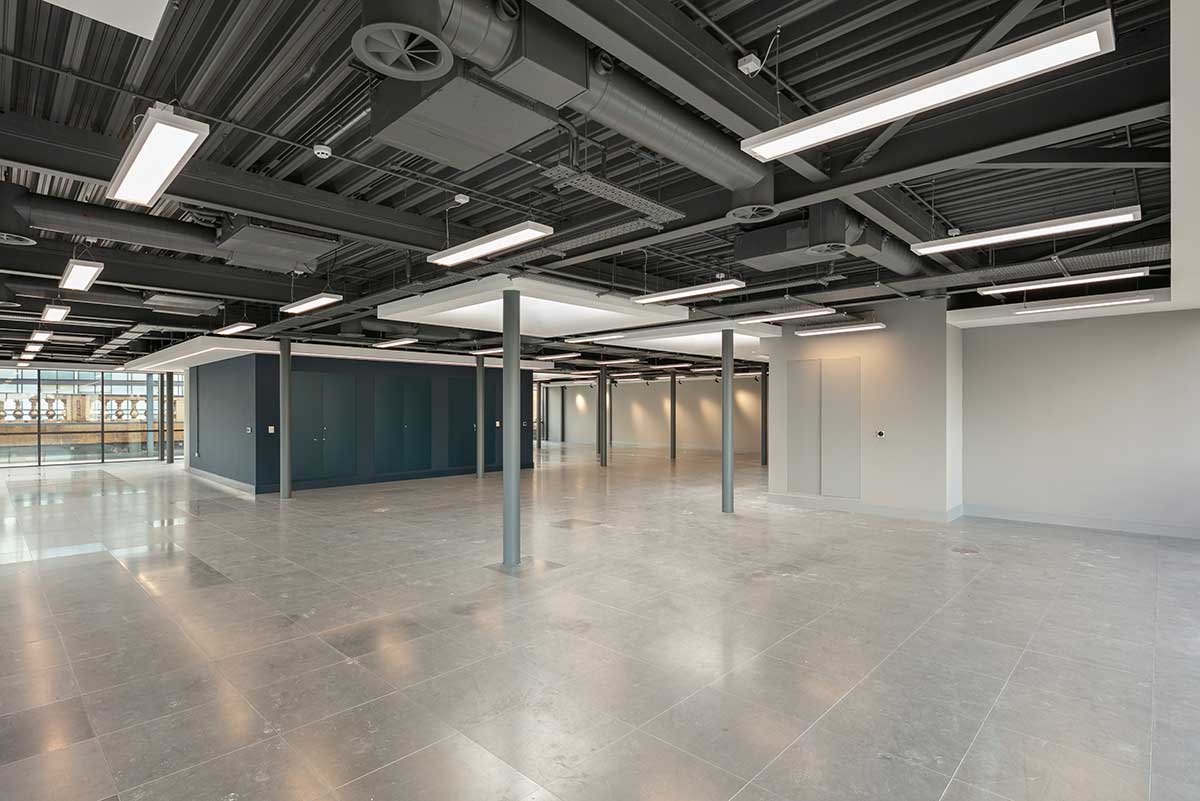
A Cat A fit out brings a commercial space up to a functional but unfinished standard. The work is typically carried out by the landlord or building owner, and covers the core building services and internal surfaces. While specifications can vary between buildings, Cat A generally includes the following:
- Raised access floors or concrete floor finishes provide a level base and allow cabling to be routed beneath the surface.
- Suspended ceilings are installed to house lighting, ventilation, and services infrastructure.
- Mechanical and electrical services are commissioned, including HVAC systems, power distribution, and basic lighting.
- Fire detection and protection systems, including smoke detectors, sprinklers, and emergency lighting, are put in place to comply with building regulations. Internal surface finishes, such as painted plasterboard walls, are applied to create a clean, neutral environment.
What Cat A does not include is equally important to understand. There will be no office furniture, partitioning, meeting rooms, kitchen areas, or IT infrastructure. The space is ready to be fitted out, but it is not ready to work in.
Who Is a Cat A Fit Out For?
Cat A fit outs are most commonly delivered by landlords, developers, or asset managers who are preparing a building for the commercial letting market. By bringing the space to Cat A standard, they make it attractive to a wide range of prospective tenants without pre-committing to any particular layout or brand identity.
From the tenant’s perspective, taking on a Cat A space means you will need to invest in a Cat B fit out to make it usable for your business. This is the stage where the space is designed and built around your specific requirements: your team, your ways of working, and your brand. The cost and timescale of that work will depend on the size of the space and the complexity of what you need.
Some businesses prefer Cat A spaces because they offer maximum flexibility. You are not inheriting someone else’s layout or colour scheme. You start with a blank canvas and build the environment your people actually need.
What Happens After a Cat A Fit Out?
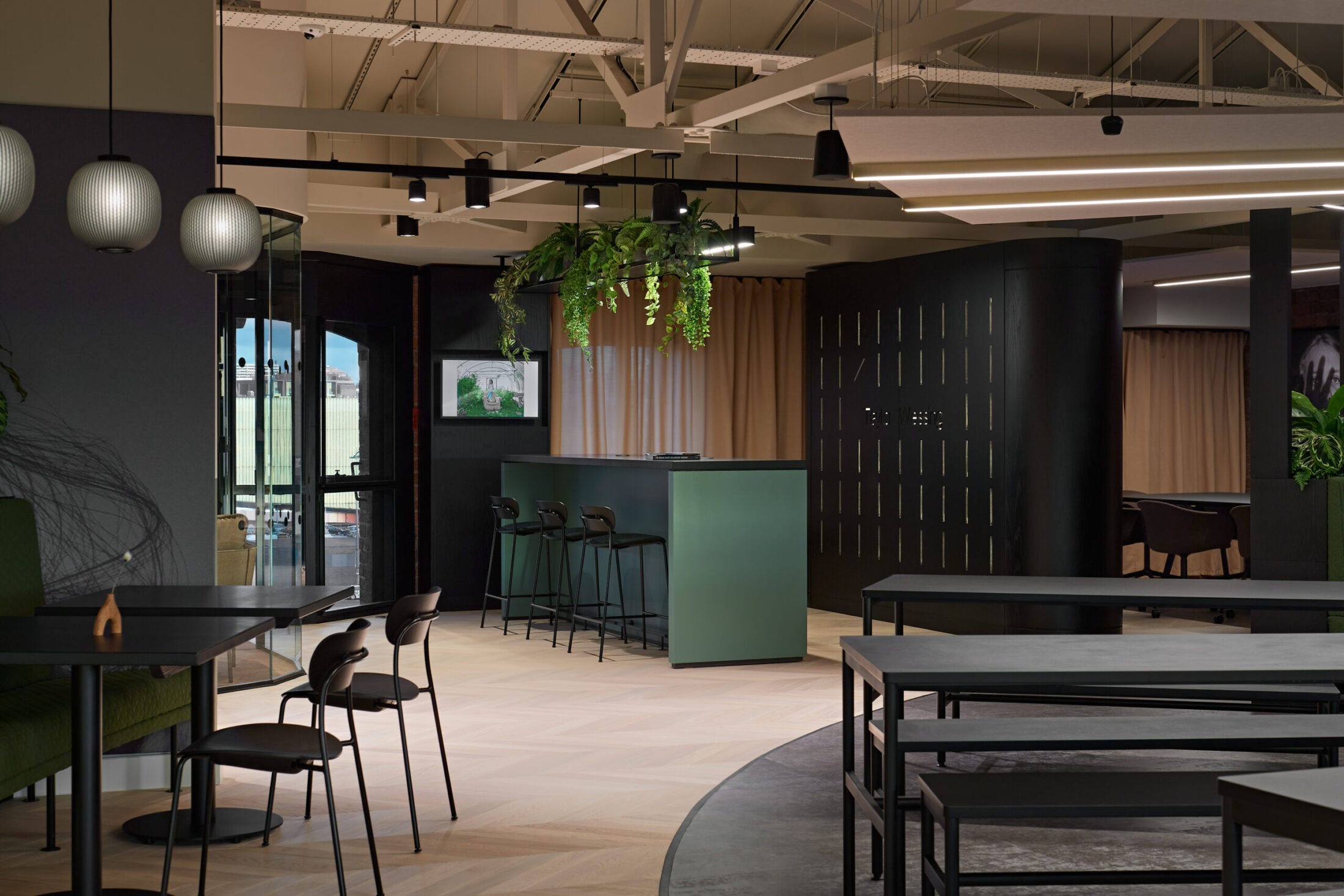
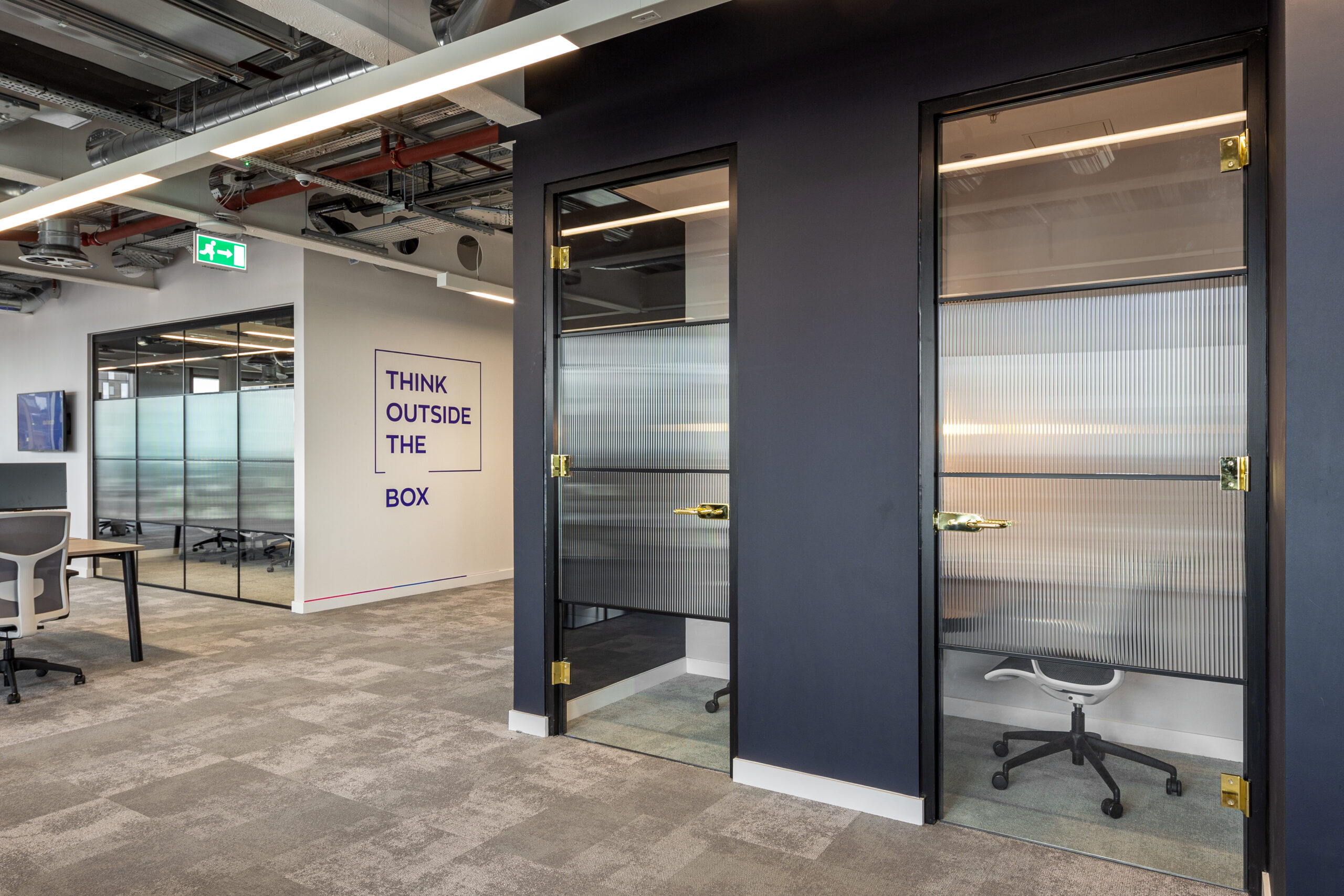
Once a Cat A fit out is complete, the next stage is typically a Cat B fit out. This is the process of transforming the blank canvas into a fully functional, branded workplace. It is where the real design work happens: space planning, partitioning, furniture specification, lighting design, AV and IT infrastructure, kitchen and welfare facilities, and all the finishing touches that make a space feel like your own.
There is also an intermediate option known as Cat A+, where landlords deliver a space that goes beyond Cat A but stops short of a full bespoke Cat B fit out. Cat A+ spaces typically include partitioned meeting rooms, installed furniture, and functioning IT points, making them quicker and cheaper to occupy for tenants who need to move quickly.
How Long Does a Cat A Fit Out Take?
The timescale for a Cat A fit out depends on the size of the building and the scope of work involved. For a small floor plate, Cat A works might take six to ten weeks. For larger commercial schemes, the programme can run to several months, particularly where structural works, services upgrades, or phased handovers are involved.
If you are a tenant planning a Cat B fit out to follow on from Cat A works, it is worth building additional time into your programme. The two phases often run closer together than anticipated, and delays on the Cat A works can have a knock-on effect on your Cat B start date. Engaging your fit out contractor early, before Cat A is complete, is usually the most efficient approach.
How Much Does a Cat A Fit Out Cost?
Cat A fit out costs are typically borne by the landlord or developer, not the incoming tenant. For tenants, the more relevant question is what the Cat B fit out will cost once you take occupation. That said, understanding the Cat A specification helps you assess the quality of what you are inheriting and whether the existing services are adequate for your needs.
Where tenants do carry out Cat A works, for example when stripping back and refreshing a space before their own Cat B, costs typically range from £30 to £60 per square foot depending on location and scope. London and the South East tend to sit at the higher end of that range. Regional markets such as Manchester and Birmingham are generally more cost-effective.
What Is the Difference Between Cat A and Cat B?
The simplest way to think about it is this: Cat A is what the landlord delivers. Cat B is what the tenant builds on top of it. Cat A provides the building services, surfaces, and structure. Cat B provides the design, personality, and functionality that makes the space work for a specific organisation.
The two are complementary stages of the same process. Most businesses moving into a new commercial space will experience both, even if the Cat A work is invisible to them because it was completed before they arrived. Our guide to the differences between Cat A, Cat B and Cat A+ explores this in more detail.
How We Can Help
Our team delivers Cat A fit outs for landlords, developers, and occupiers across the UK. Whether you are preparing a building for the market, refreshing a space between tenants, or planning the full journey from Cat A through to an occupied Cat B workplace, we bring the experience and supply chain to deliver efficiently and to a high standard.
We also work with businesses on their Cat B fit out once the Cat A groundwork is in place, managing the entire process from initial brief through to handover. If you are at the early stages of planning a move or refurbishment and want to understand your options, we are happy to talk.