A Practical Guide for Modern Workplaces
Smart office technology is one of the fastest-growing areas of workplace investment – and one of the easiest to get wrong. Vendors promise frictionless experiences, data-driven insights and buildings that practically manage themselves. The reality, for many organisations, is a collection of underused apps, unreliable systems and technology that their teams have quietly learned to work around.
This guide is designed to cut through the noise. We look at the categories of smart office technology that genuinely deliver value, the questions you should ask before investing, and the common mistakes that lead to expensive technology sitting unused.
What Is Smart Office Technology?
Smart office technology refers to any digital system that connects, automates or provides data about the physical workplace. This ranges from simple room booking screens and wireless presentation systems to sophisticated occupancy sensors, environmental monitoring platforms, access control systems and AI-powered space management tools.
The common thread is connectivity. Smart office technologies typically collect data, respond to inputs or communicate with other systems – rather than simply performing a single, static function. A standard light switch is not smart technology. A lighting system that responds to occupancy, adjusts to natural light levels and can be controlled via an app is.
Start With the Problem, Not the Technology
The most important principle when evaluating smart office technology is to start with the problem you are trying to solve, not the technology you have been shown. Technology vendors are skilled at presenting solutions that feel compelling in a demonstration but are less relevant to your specific context.
Before investing in any smart office system, ask: what specific problem does this solve? How does that problem currently affect our people or our business? What would success look like, and how would we measure it? Is this technology the best solution to this problem, or are there simpler alternatives? These questions will quickly separate the investments that make genuine operational sense from those that are primarily impressive to show visitors.
Room Booking and Space Management
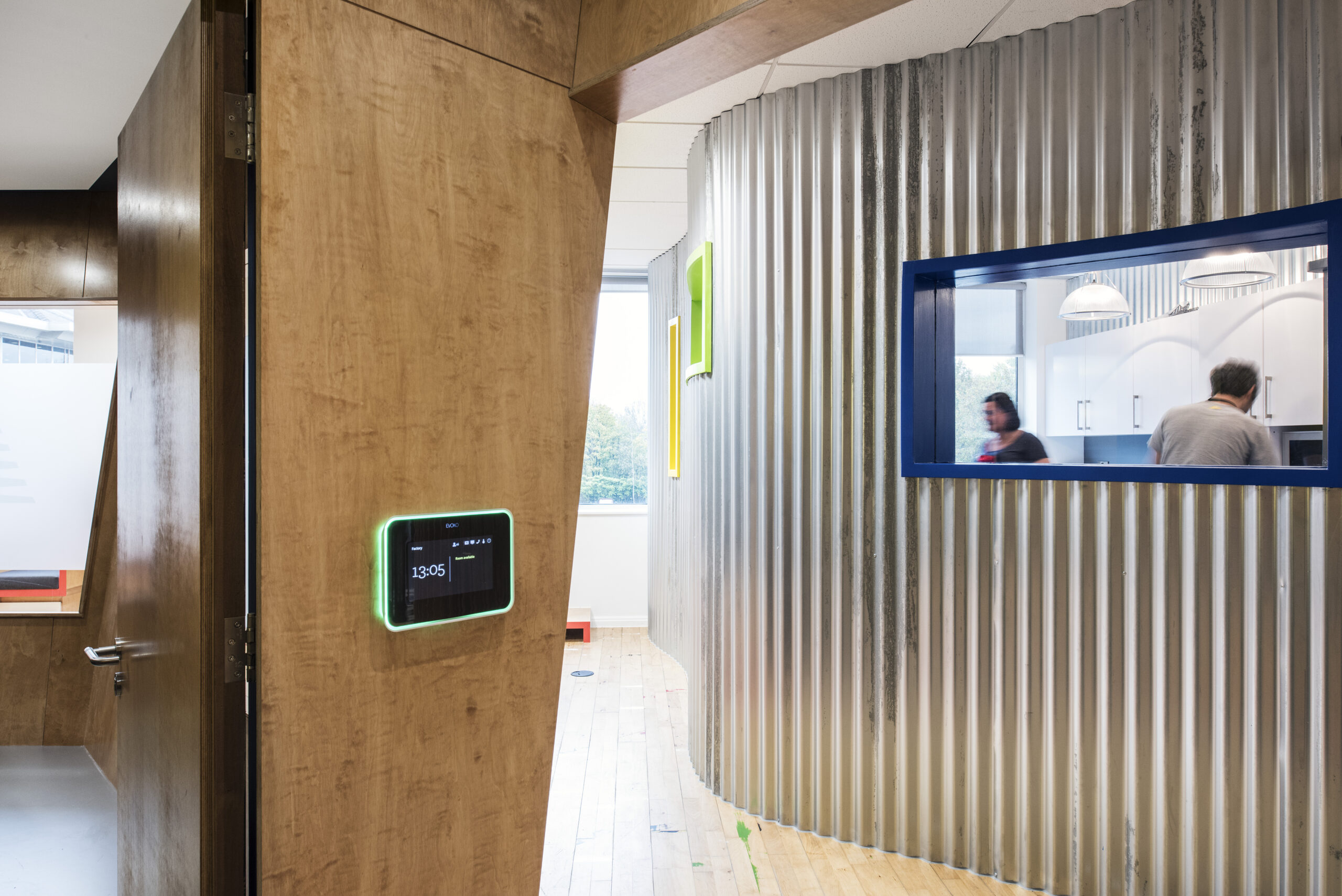
Room booking technology is one of the most widely adopted categories of smart office technology, and one of the most consistently valuable when implemented well. The ability to book meeting rooms in advance, see real-time availability and release rooms that are no longer needed addresses one of the most common sources of workplace frustration – the meeting room that has been booked and not shown up for, while colleagues search the floor for an available space.
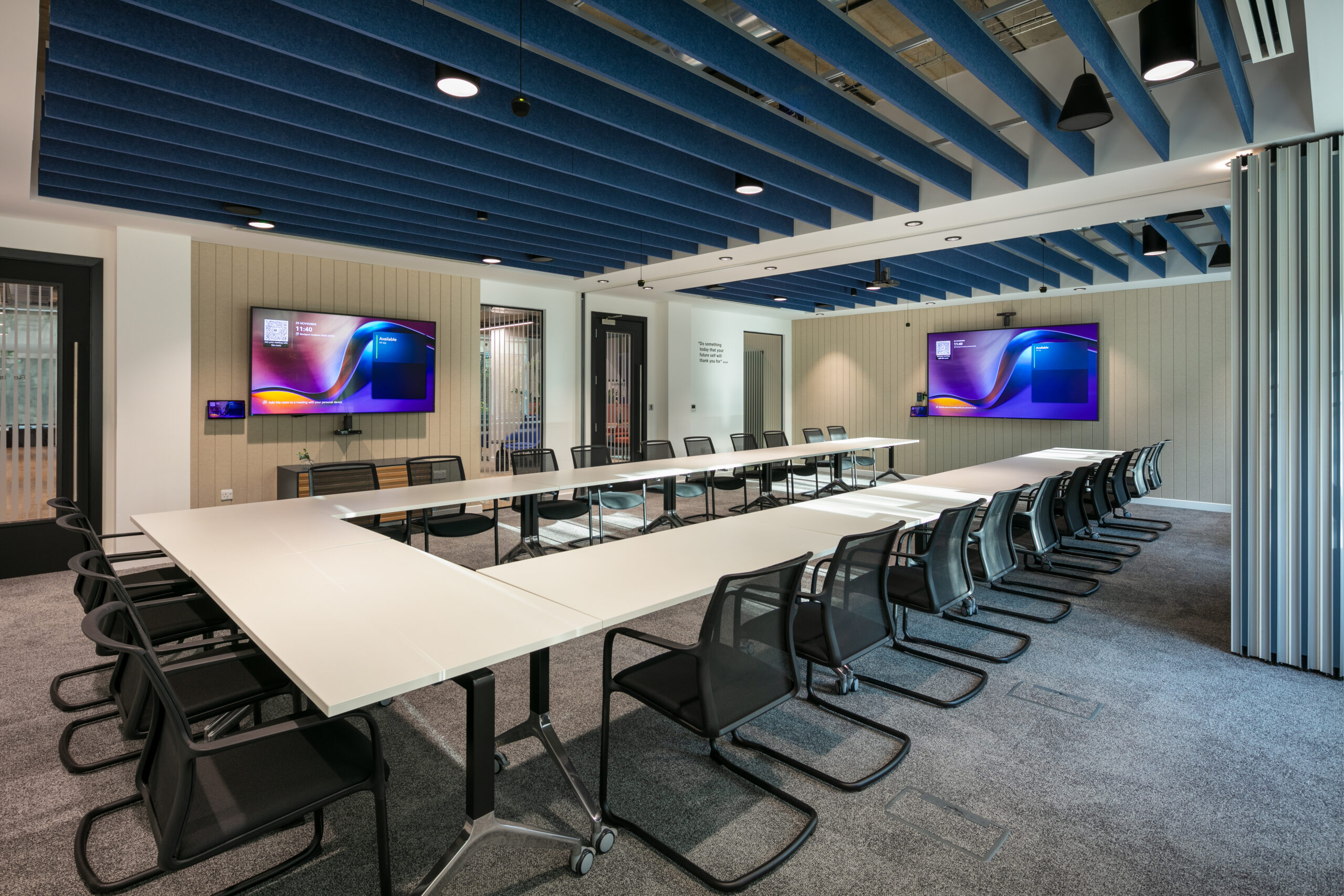
Modern room booking systems typically include a screen outside each room showing availability, integration with calendar platforms such as Microsoft 365 or Google Workspace, automatic room release if occupancy is not confirmed, and reporting on room utilisation. The data these systems generate is also valuable – occupancy reports help organisations understand which rooms are most in demand, which are consistently underused, and whether their meeting room provision matches their actual patterns of use.
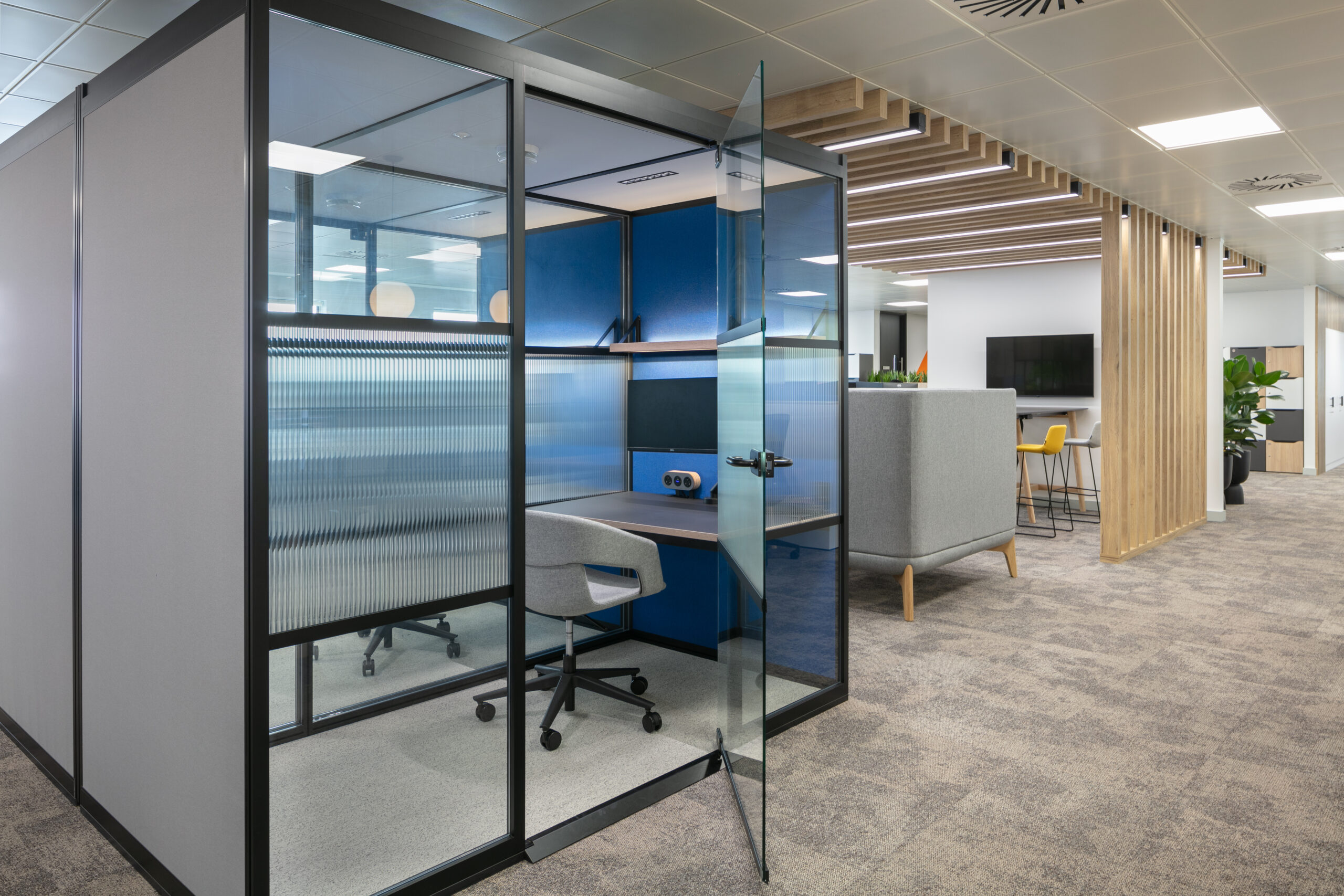
Occupancy Sensing and Space Utilisation
Occupancy sensing technology provides real-time and historical data on how your office space is being used. Sensors mounted on desks, in rooms or in ceilings can detect whether a space is occupied, for how long, and at what times of day – without tracking individuals or recording any personal data.
This data is extremely valuable for organisations managing hybrid working environments, where the relationship between headcount and desk requirement has become more complex. Understanding your true peak and average occupancy allows you to make evidence-based decisions about how much space you actually need, how your floorplate should be configured, and where investment in new or reconfigured space would have the greatest impact.
Occupancy data is also increasingly used to inform cleaning schedules, energy management and building operations – reducing costs by focusing resource where it is actually needed rather than applying it uniformly across the building.
AV and Video Conferencing Technology
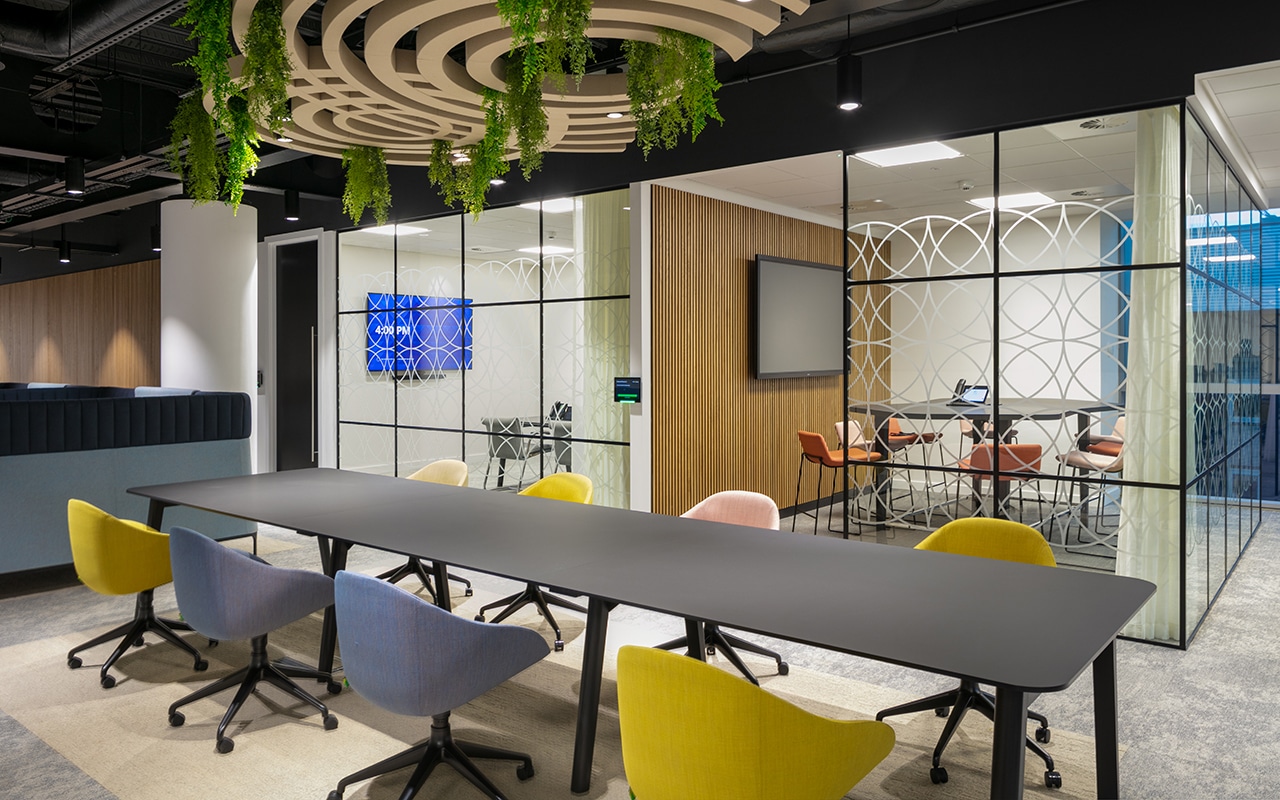
As hybrid working has become the norm, the quality of audio-visual and video conferencing technology in meeting rooms has moved from a nice-to-have to a fundamental requirement. Poor AV – echoey audio, pixelated video, cables that don’t work, systems that require IT support to operate – is one of the most commonly cited sources of workplace frustration.
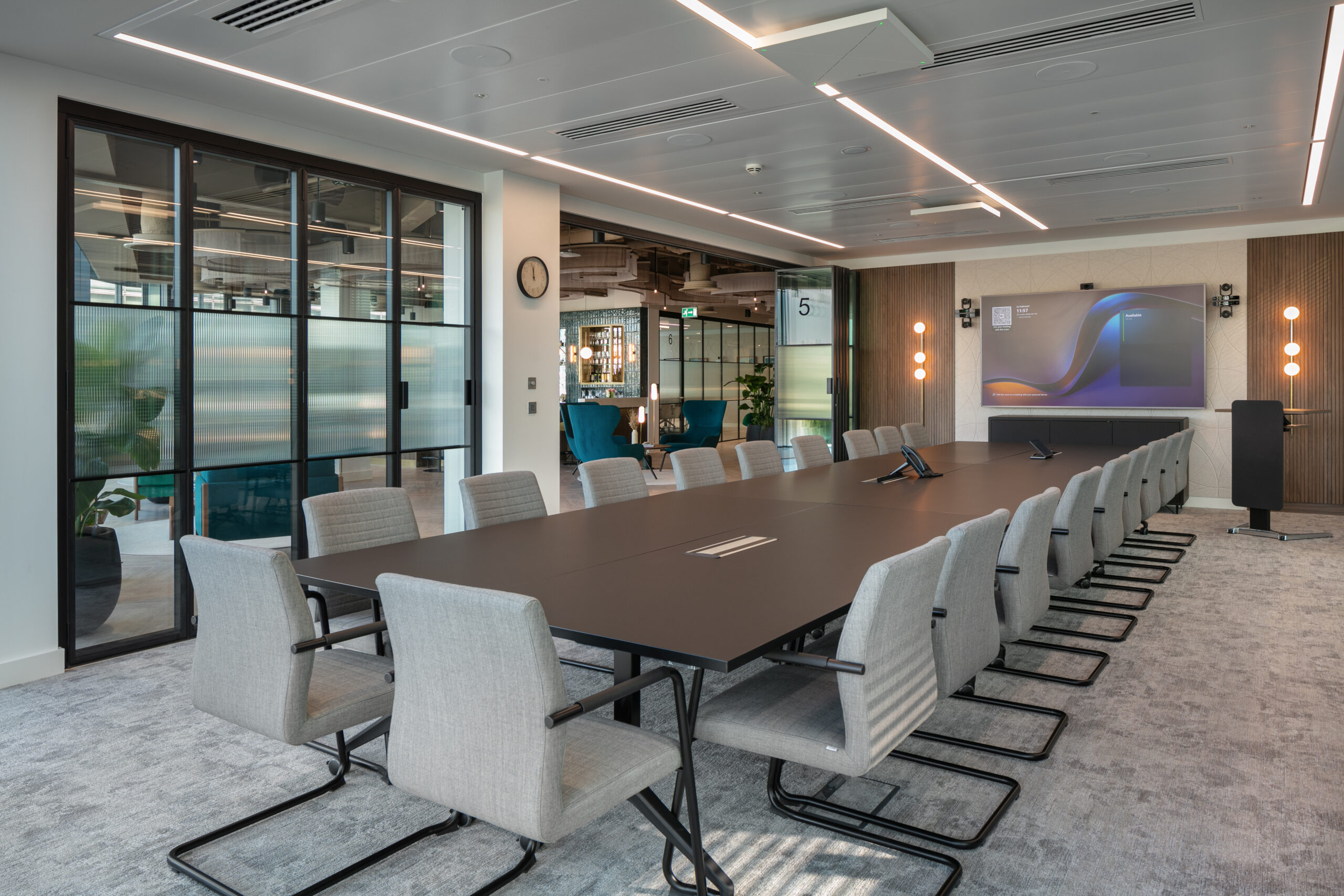
Investing in reliable, easy-to-use AV is one of the highest-return technology investments an organisation can make. The core requirement for most meeting rooms includes a quality camera with appropriate field of view for the room size, a microphone system with adequate coverage, a clear and well-sized display, reliable wireless content sharing and a simple, consistent control interface.
Consistency across rooms matters as much as individual specification. A fleet of meeting rooms that all operate the same way – with the same control interface, the same connection process, the same AV system – significantly reduces the friction of starting a meeting and the reliance on IT support.
Environmental Monitoring and Control
Environmental quality – temperature, air quality, CO2 levels, humidity and lighting – has a measurable impact on cognitive performance, wellbeing and employee satisfaction. Yet in many offices, environmental conditions are managed by building management systems that respond slowly or not at all to changes in occupancy or external conditions.
Smart environmental monitoring technology provides real-time data on workplace conditions, alerting facilities teams when CO2 levels rise above thresholds associated with reduced concentration, when temperatures drift outside comfortable ranges, or when air quality metrics indicate a ventilation issue. Some systems can automatically adjust HVAC settings in response to these readings.
The business case for environmental monitoring is both a wellbeing and a productivity argument. Research consistently shows that employees in well-ventilated, appropriately lit and thermally comfortable environments perform measurably better than those in poor conditions.
Access Control and Security
Modern access control systems have moved well beyond keycards and PIN codes. Mobile credentials – which allow employees to use their smartphone to access the building and specific areas within it – are increasingly standard in new fit outs. These systems integrate with HR platforms to automatically provision and revoke access when employees join or leave, and can generate detailed access logs for security and compliance purposes.
For organisations with more complex security requirements – multiple tenancy buildings, areas requiring different levels of clearance, visitor management needs – smart access control delivers both improved security and operational efficiency. The ability to grant temporary access to a visitor or contractor remotely, without issuing a physical key or card, is a practical benefit that compounds over time.
Technology That Is Rarely Worth the Investment
Not all smart office technology delivers on its promise. App-controlled coffee machines, IoT-connected furniture and elaborate digital wayfinding systems are frequently purchased, rarely used and quietly removed. The pattern is consistent: technology that solves a problem employees do not find particularly pressing, or that requires behaviour change to adopt, tends to underperform relative to its cost.
The best technology in any workplace is the technology that people use without thinking about it. If a system requires training, a dedicated app or a habit change to deliver its benefits, evaluate carefully whether those benefits justify the friction.
Integrating Technology Into Your Fit-Out From the Start
The most common technology mistake in office fit out is treating it as an afterthought. Technology that is retrofitted into a completed fit out rarely works as well as technology that is integrated from the outset – because the infrastructure, containment, power provision and aesthetic integration have not been planned for.
At ADT Workplace, we integrate technology specification into our design and build process from day one, ensuring that your AV, data, access control and smart building requirements are considered alongside the architectural and interior design decisions. The result is a workplace where technology works seamlessly rather than visibly fighting against the building.