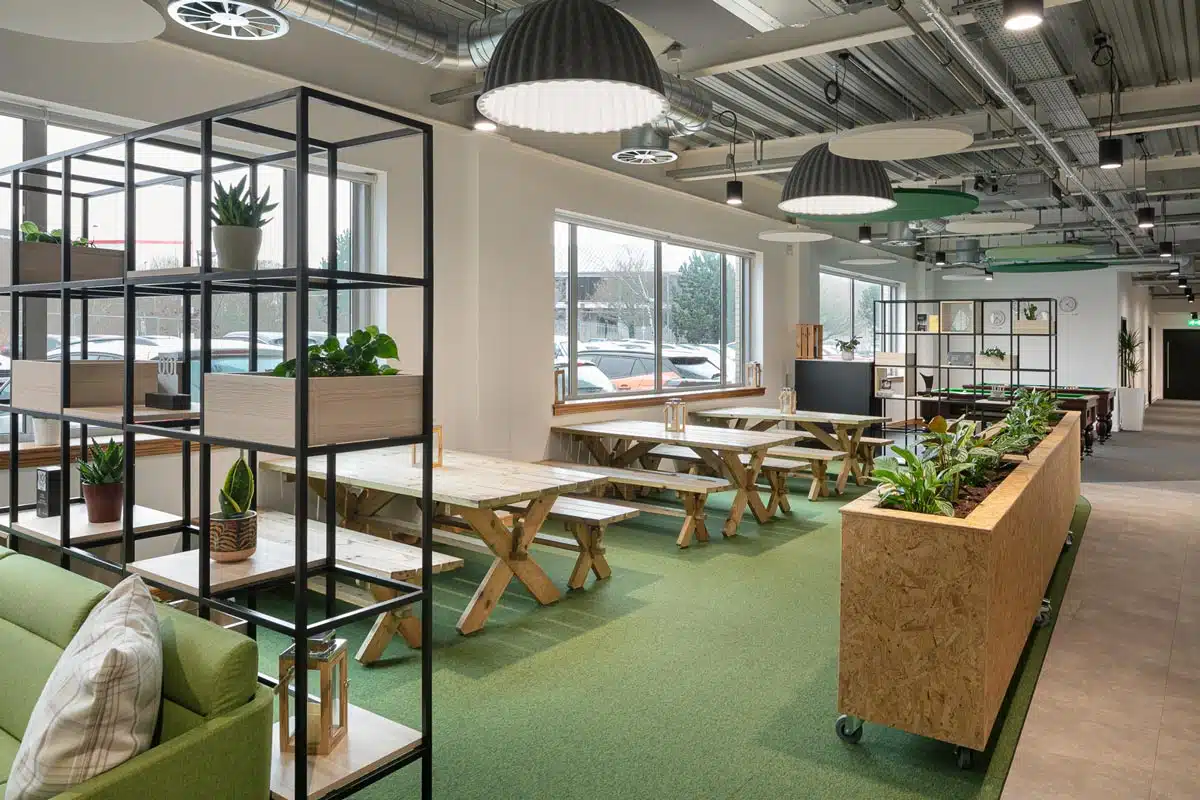
Sustainable office design is no longer a “nice extra”. It is now a performance decision. Clients want spaces that look great. However, they also want evidence of impact. That means clear targets, joined-up design choices, and reporting that stands up to scrutiny.
At ADT Workplace, we approach sustainability as part of workplace strategy. It starts early, and it stays live throughout delivery. As a result, sustainability becomes something you can measure, improve, and maintain.
Start with objectives, not products
It is easy to jump straight to “eco” finishes. Instead, begin with objectives that relate to your business. That way, your brief drives the right design outcomes.
Common sustainability objectives include:
- Embodied carbon reduction across fit-out elements such as flooring, partitions, ceilings and furniture.
- Operational energy targets, including lighting efficiency and building controls.
- Material lifecycle planning, including durability, repairability, and end-of-life reuse.
- Workplace wellbeing metrics, such as air quality and lighting comfort.
- Certification pathways, including BREEAM and SKA Rating, where they suit the brief.
Once the objectives are clear, the design can do the heavy lifting. Consequently, sustainability is built in rather than bolted on.
Target carbon early and you gain control
The biggest sustainability gains often come from decisions made at concept stage. For example, circular planning can cut embodied carbon quickly. Many 2026 briefs now start with a reuse audit. Teams review what can stay, what can be refurbished, and what can be redeployed.
From there, specification becomes “carbon-first”. In other words, materials are judged on impact as well as appearance. High-volume items matter most. Therefore, choosing durable finishes and responsibly sourced options can shift the footprint in a meaningful way.
Refurbishment-first delivery is another major lever. It avoids unnecessary replacement. It also helps reduce waste. Meanwhile, it can protect programme and budget when lead times are tight.
Energy efficiency, EPC outcomes, and long-term cost
Operational energy still shapes the real-world impact of a workplace. Lighting, HVAC performance, and controls influence both carbon and running costs. That is why energy-efficient systems remain a core element of sustainable office design.
EPC ratings also matter. They affect perceived building quality, leasing conversations, and future compliance pressures. An EPC rating reflects energy efficiency from A to G. So, improving building performance can strengthen landlord negotiations and support long-term resilience.
In practice, this often means prioritising upgrades that improve day-to-day efficiency. For example, targeted HVAC improvements and better controls can deliver measurable gains.
Wellbeing metrics are part of sustainability performance
A sustainable office must support people as well as planet. That link is now stronger in 2026 briefs. Better comfort helps teams thrive. It can also support productivity and retention.
ADT Workplace’s Wellspace principles align sustainability with experience and performance. They focus on how people use the space, and how the environment supports healthy work.
Key wellbeing-led design measures include:
- Air quality: effective ventilation supports health, alertness, and comfort.
- Natural light: access to daylight supports circadian rhythms and reduces fatigue.
- Acoustics: noise control supports focus and reduces distraction.
- Thermal comfort: controllable heating and cooling supports satisfaction and performance.
Sustainability also influences talent attraction. On our sustainability page, we cite that 68% of graduates say a sustainable workplace is important to them. That is a commercial driver, not just a values statement.
Make it measurable with the right frameworks
Measurement turns ambition into progress. That is where standards help.
BREEAM provides a recognised framework for building sustainability, covering areas such as energy, water, materials and wellbeing factors.
For fit-outs, SKA Rating is a practical benchmark for non-domestic projects, with Bronze, Silver, and Gold outcomes.
These frameworks reduce guesswork. They also support clearer reporting for stakeholders. As a result, you can evidence outcomes with more confidence.
Plan for performance after handover
Sustainability does not end on move-in day. Increasingly, businesses are tracking energy use and comfort after occupation. They then fine-tune settings and behaviours.
Post-occupancy reviews help teams learn what works in real use. Consequently, the office improves over time. This approach supports measurable outcomes rather than one-off claims.
What this looks like in practice
On our sustainability page, we highlight a project for Henry Boot in Sheffield. The sustainability-first approach is expected to reduce carbon emissions by 79% compared to the former head office. That is the value of setting targets early and designing to them.
Why ADT Workplace
Sustainability needs governance behind it. As part of our ESG journey, we are developing a net zero roadmap aligned to the UN Sustainable Development Goals. We also prioritise decarbonisation over offsetting and focus on responsible supply chains.
We are also a Real Living Wage employer, accredited by the Good Business Charter, and hold ISO 45003 which guides better employee mental health and wellbeing. In addition, ADT Workplace is 100% employee-owned, supported by robust governance structures.
Ready to define a sustainable brief?
If you want a sustainable office with measurable impact, start with strategy. Set clear targets at design stage. Then build decisions around carbon, energy, lifecycle value, and wellbeing. When you do, sustainability becomes a commercial advantage as well as a responsibility.
If you would like support shaping your brief, speak to ADT Workplace. We can help you plan, design, and deliver a workplace that performs for people, planet, and profit.
