A well-designed office should do more than look impressive. It should support the way people actually work, move and interact each day. However, many workplaces still contain spaces that sit empty, while other areas are constantly busy. That imbalance often comes down to one issue. The design does not match real behaviour.
We see this challenge regularly when businesses review how their workplace is performing. Although a layout may seem right on paper, daily habits can tell a very different story. As a result, meeting booths may be overbooked, breakout areas may feel underused, and desks may not support the mix of focus and collaboration people need. Therefore, designing offices that get used starts with understanding what people naturally choose to do, not simply what the floorplan says they should do.
Why some office spaces fail to get used
There are several reasons why parts of an office go unused. In some cases, the issue is location. A space might be too exposed, too far from core activity, or too disconnected from the rest of the workplace. In other cases, the problem is purpose. If people do not clearly understand what a space is for, they are less likely to use it.
Sometimes, the problem is comfort. Poor acoustics, weak lighting, awkward furniture, or limited privacy can all make an area less appealing. Equally, if a setting feels too formal or too rigid, people may avoid it in favour of somewhere more natural and flexible.
This is especially important in modern workplaces. Hybrid working has changed how offices are used, and many businesses now expect the workplace to support a wider range of activities. ADT Workplace’s service approach already centres on workplace consultancy, space planning, design and fit out, which reflects the need to align people, processes, space and technology rather than treating layout as a standalone exercise.
The gap between intended and actual workplace use
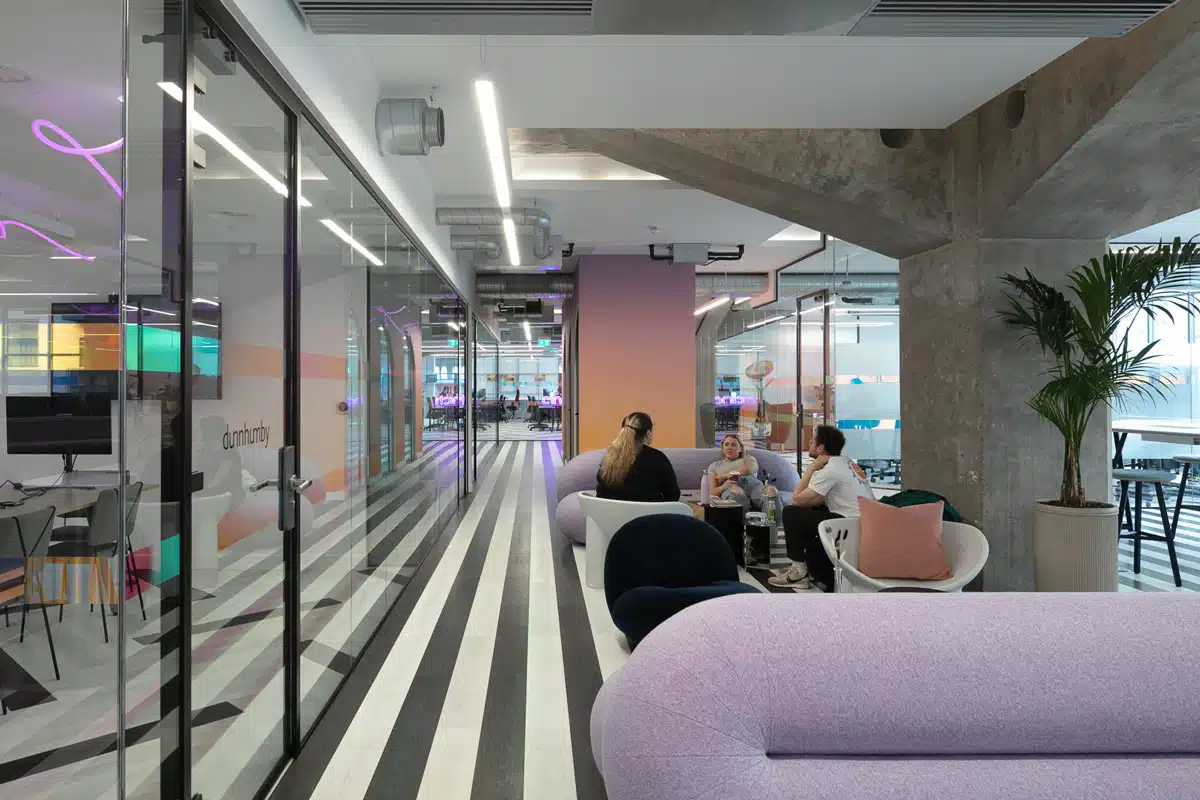
One of the biggest mistakes in office design is assuming that intended use and actual use will be the same. For example, a business may plan for a quiet zone, but staff might choose not to use it if it is placed near a noisy circulation route. Likewise, a breakout area may be designed for informal collaboration, yet people may only use it as a waiting space if the furniture and setting do not support longer discussions.
This gap often appears because workplace decisions are made around assumptions. A team may believe they need more desks, more booths or more meeting rooms. Yet once behaviour is observed properly, the real issue may be something else. It might be poor adjacencies, limited choice, or a lack of clear zoning between focused and social areas.
That is why successful workplace design needs to go beyond a visual concept. It must be rooted in evidence. We need to understand how people arrive, where they settle, what spaces they avoid, and how usage changes throughout the day. When we do that, the office becomes more intuitive and far more effective.
How data and observation improve design decisions
Good design decisions come from insight. That insight can be gathered in different ways, including occupancy data, workplace surveys, utilisation reviews, team feedback and direct observation. Each method helps build a clearer picture of how the office is performing.
For instance, observation can reveal pinch points and patterns that are easy to miss. You may find that staff prefer to work near natural light, avoid enclosed rooms in the afternoon, or gather in circulation areas because there are not enough informal touchdown spaces nearby. Similarly, utilisation data may show that some rooms are always booked, but not always occupied, while open collaboration areas are used more often than expected.
This behaviour-led approach fits naturally with wider workplace consultancy and planning. ADT Workplace presents its work as an end-to-end process, from consulting and finding space to designing and building flexible workplaces that improve performance, wellbeing and efficiency.
It also connects with earlier guidance around choosing and planning office space, where flexibility, future use and employee needs are central to decision-making.
How to create spaces people naturally choose to use
The best-used offices usually have one thing in common. They give people the right setting at the right time. In practice, that means creating a balanced mix of spaces that feel purposeful, comfortable and easy to use.
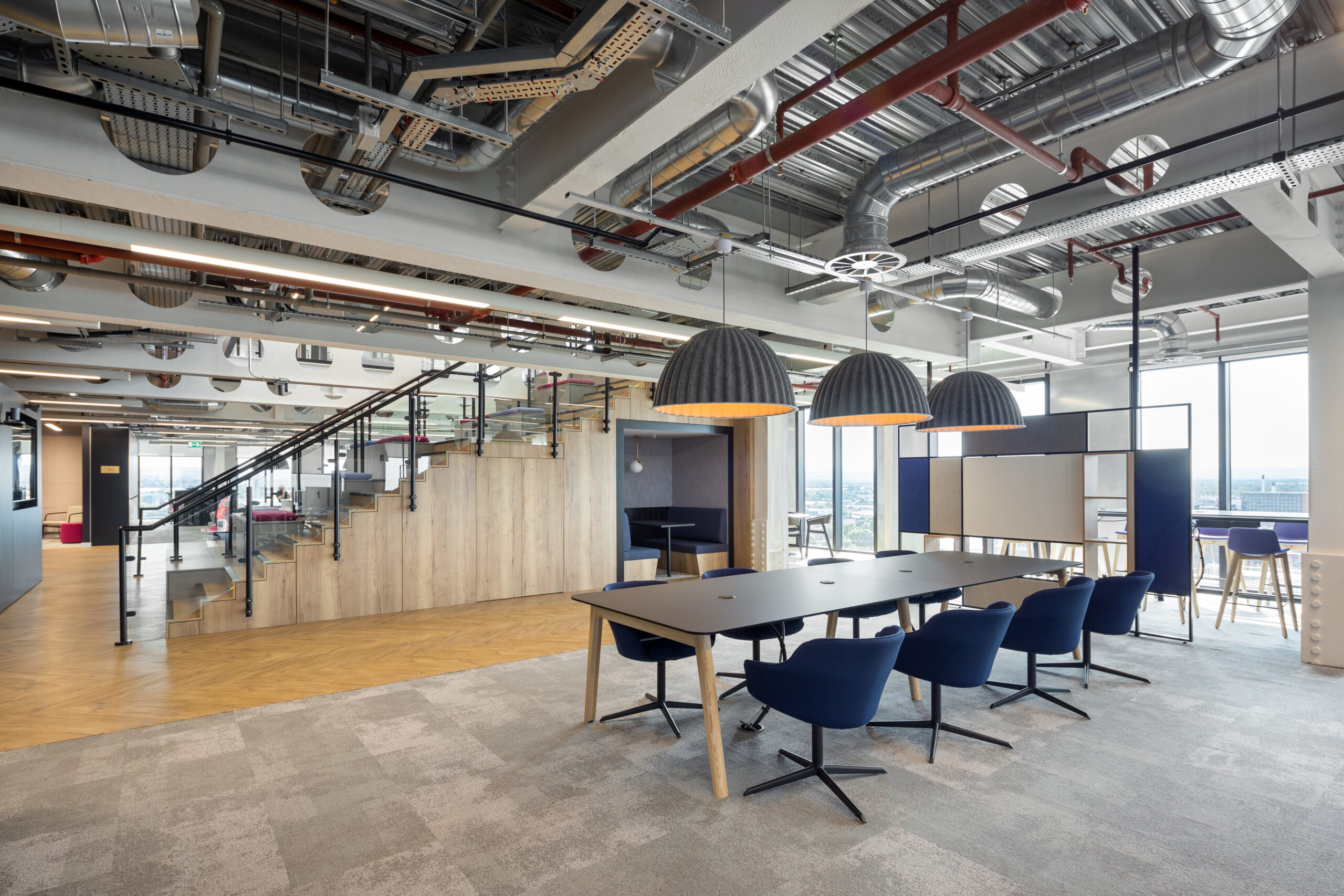
First, zoning matters. People should be able to understand the workplace quickly. Focus areas should feel calm and protected. Collaborative spaces should feel accessible and inviting. Social areas should sit naturally within the wider layout rather than feeling like an afterthought.
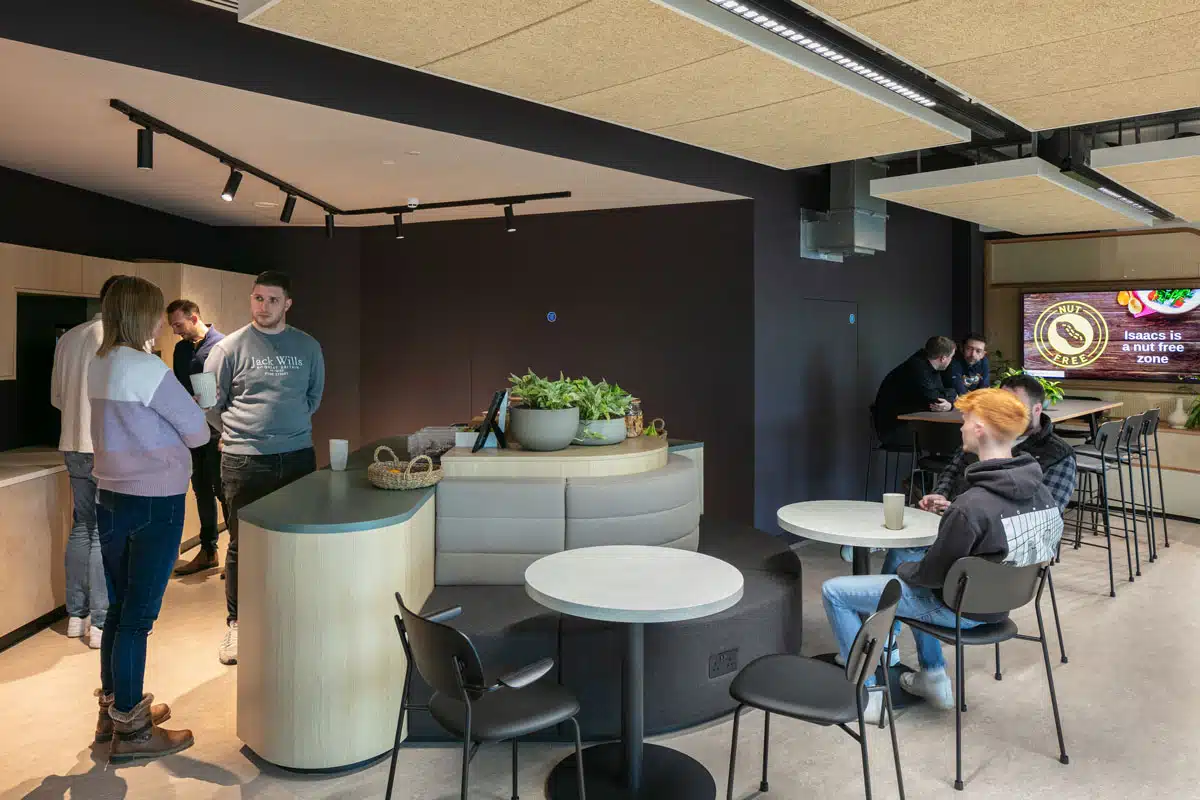
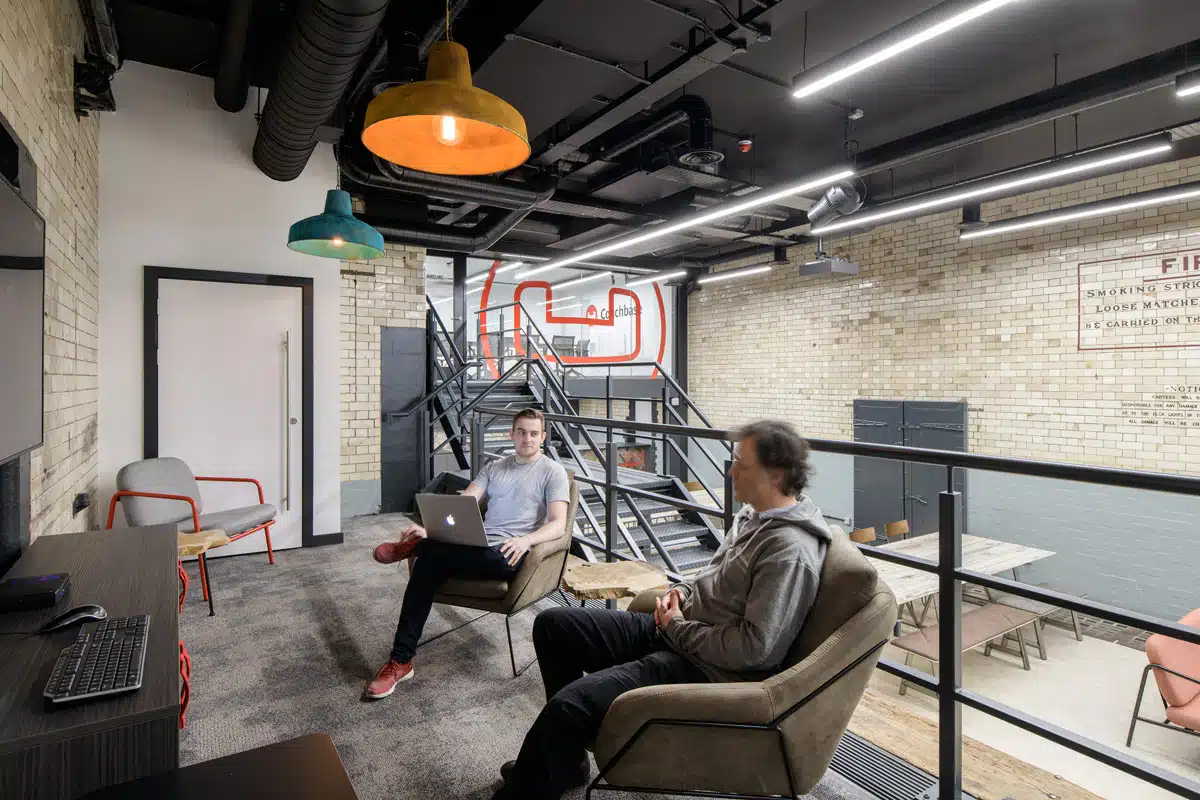
Second, choice matters. Not everyone works in the same way, and not every task needs the same setting. Therefore, a high-performing office should offer a range of environments, from quiet booths and meeting rooms to informal lounges, shared tables and touchdown points.
Third, placement matters. Even a well-designed area can fail if it sits in the wrong place. Spaces need to relate to the patterns of daily movement across the office. When collaboration settings are positioned near active teams, and quieter spaces are kept away from busy routes, usage often improves.
Finally, comfort matters. Lighting, acoustics, furniture and privacy all shape how a space feels. If an area is comfortable and easy to use, people will return to it. If it feels awkward, exposed or impractical, they will not.
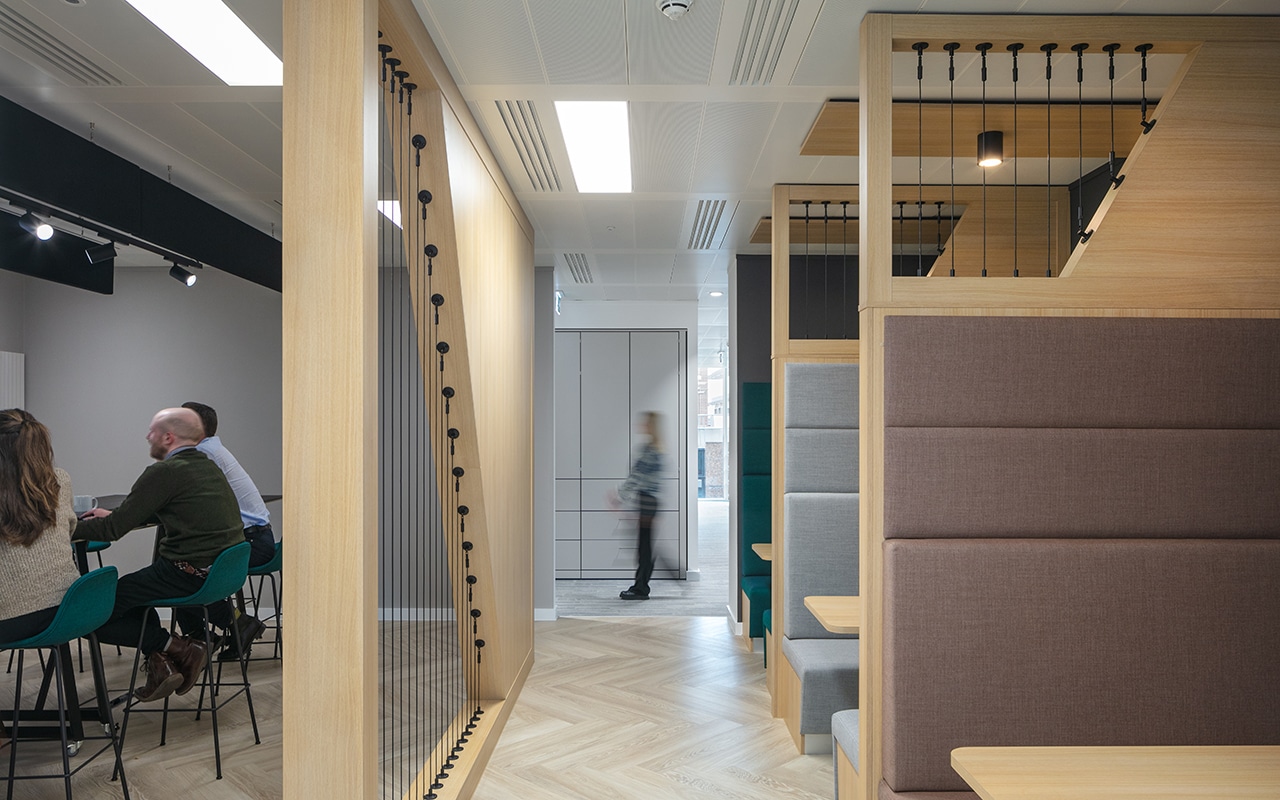
An office should never be judged only by how it looks on day one. Instead, it should be measured by how well it performs over time. Are people using the space as intended? Are they able to move through it easily? Are the right settings available for the work they need to do? When we design around real behaviour, the workplace starts to work harder. Underused areas become active. Overcrowded zones become better balanced. Most importantly, people feel that the office supports them rather than getting in their way. Designing offices that actually get used is not about adding more space. It is about making better use of the space you already have. When design is shaped by behaviour, insight and everyday experience, the result is a workplace people genuinely choose to use.
Designing for performance, not just appearance