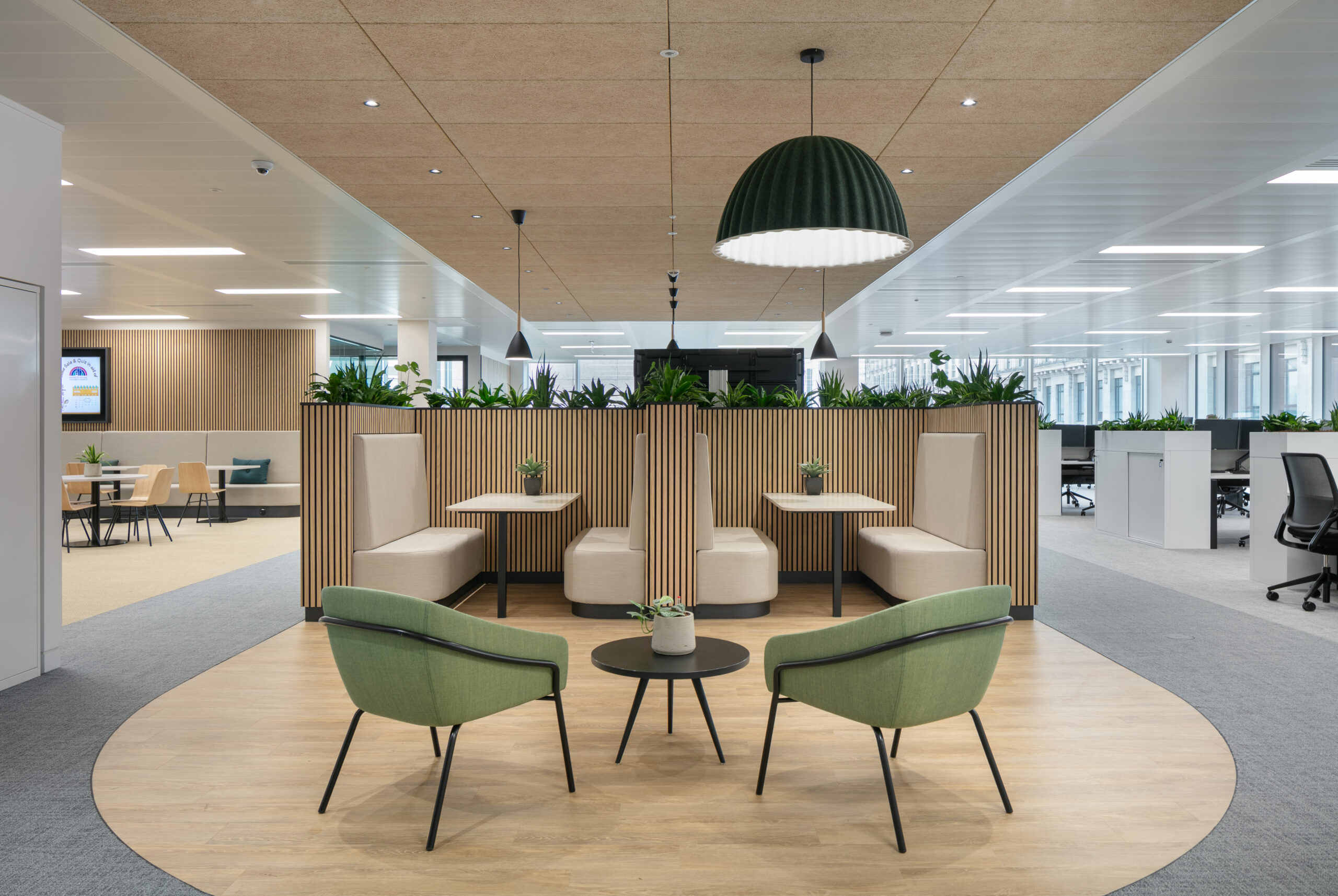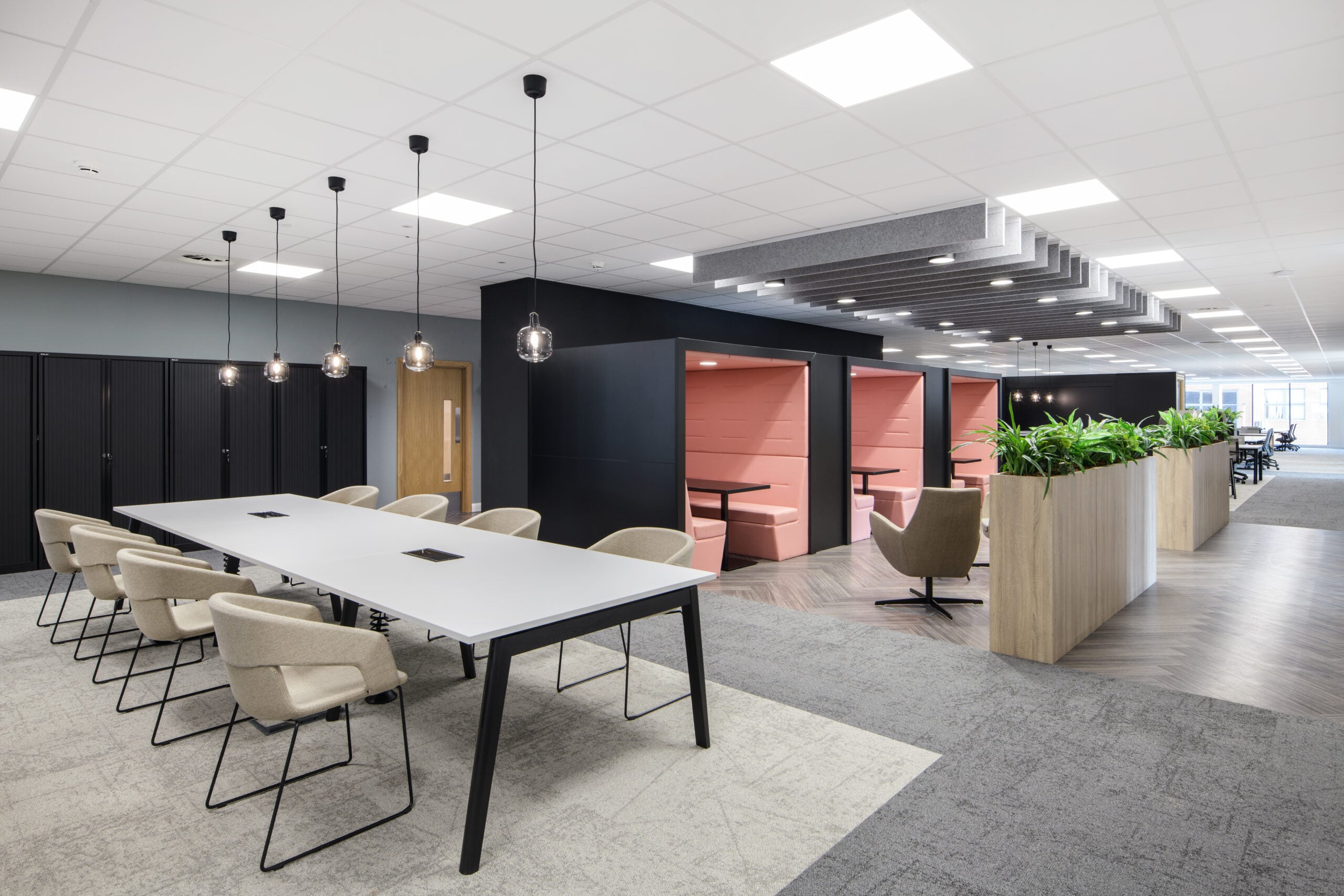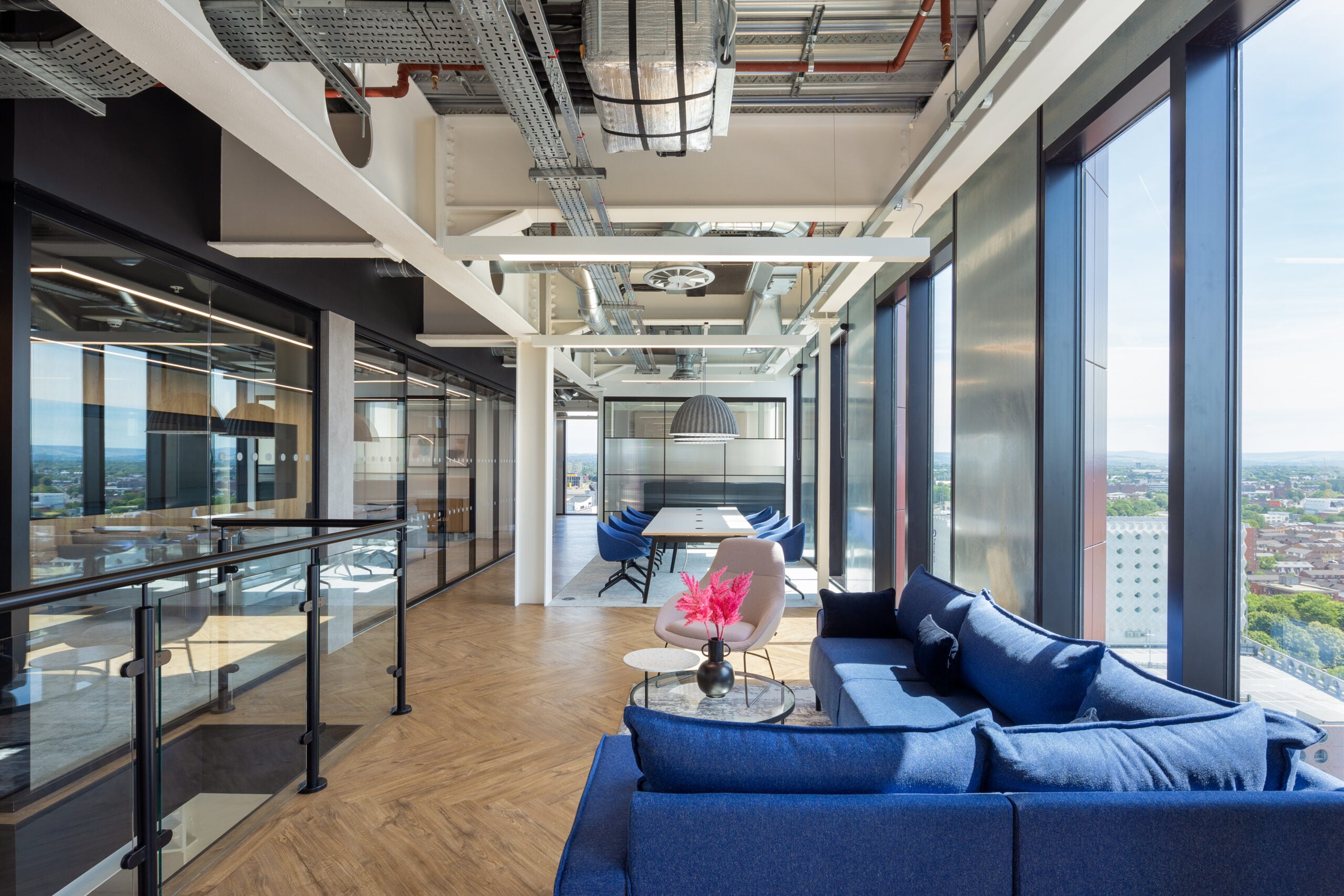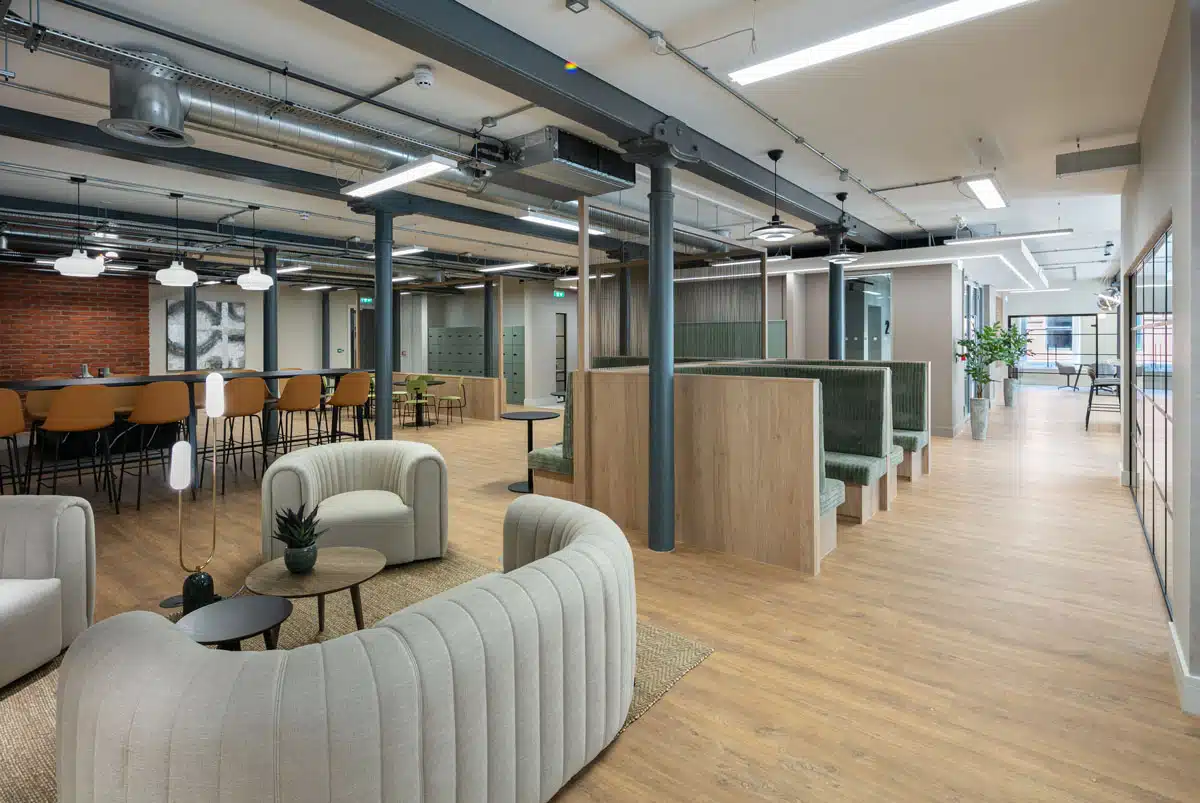
Hybrid working has changed what people need from the office. It is no longer enough to provide rows of desks and a few meeting rooms. Instead, today’s workplace must support a wider range of tasks, team patterns, and occupancy levels. Therefore, hybrid office design should focus on creating a space that feels purposeful every day, even when not everyone is in at once.
At ADT Workplace, we see hybrid office design as more than a response to remote working. It is an opportunity to create a better workplace experience. Your office should bring people together, support concentration, and reflect how your teams actually work. As a result, the layout becomes one of the most important parts of the design process.
Start with purpose, not density
A successful hybrid office layout begins with understanding why people come into the workplace. In many businesses, the office is now used less for routine solo tasks and more for collaboration, learning, meetings, culture, and connection. Because of that, space planning should be driven by behaviour rather than old occupancy assumptions.
For example, if your team mainly visits the office for project work and workshops, collaboration areas will need more priority than fixed desking. On the other hand, if privacy and focused thinking are still important on office days, quiet settings must also be built into the layout. This balance is what makes flexible workspace design effective.
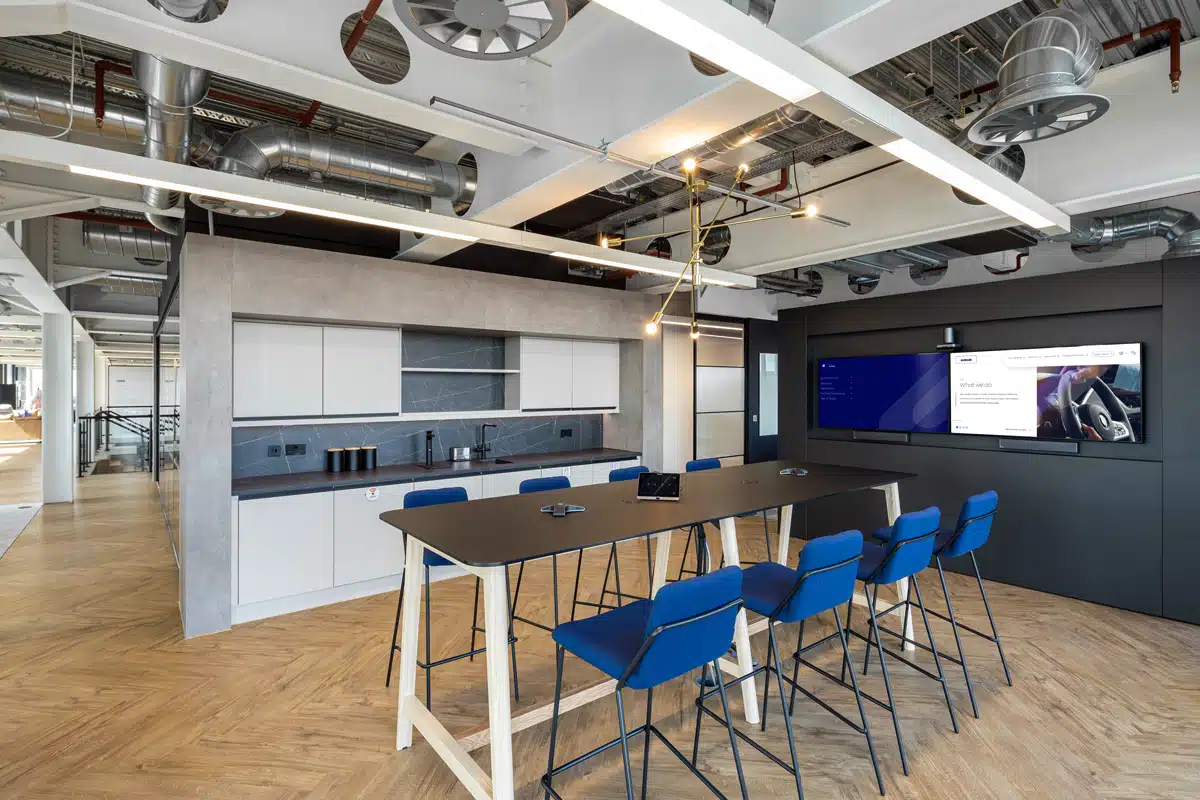
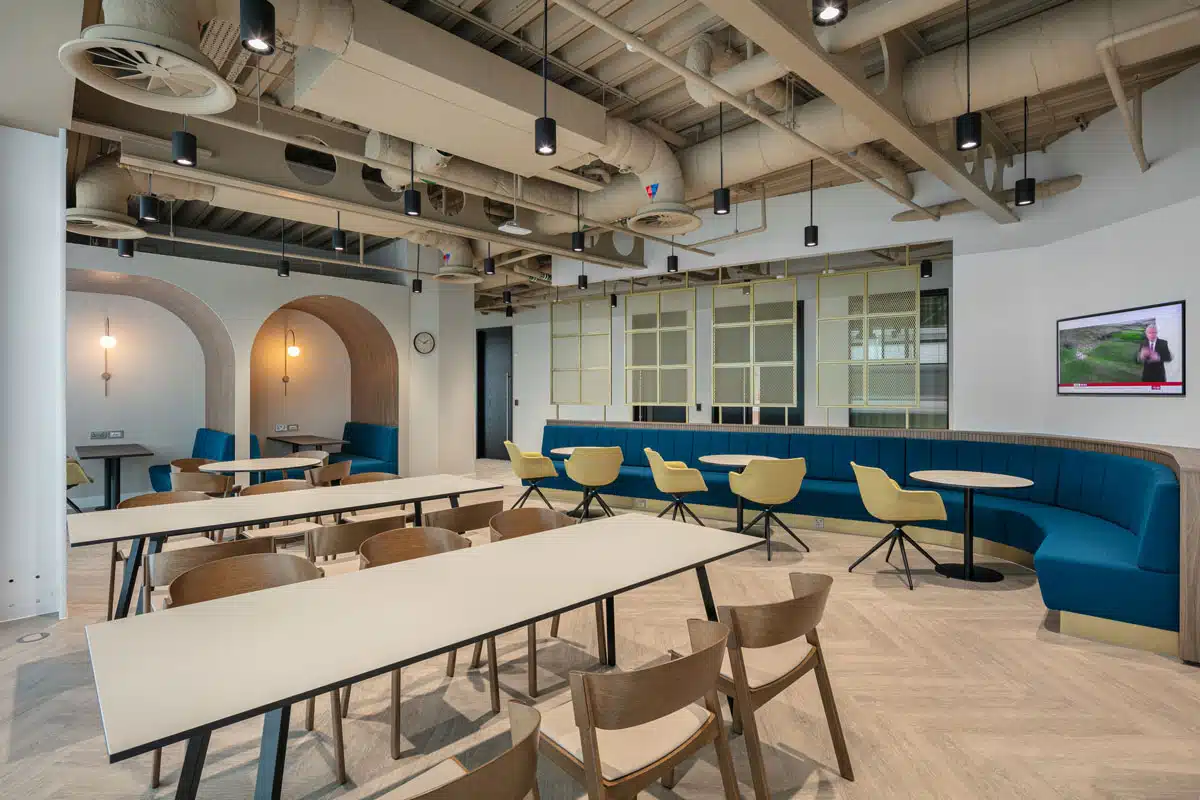
Create clear zones across the workplace
One of the best ways to improve a hybrid workspace is through zoning. Rather than treating the whole office the same, divide it into settings that support different activities. This gives employees more choice and helps the office work harder throughout the day.
A practical hybrid office layout may include:
Collaboration zones
Focus zones
Social spaces
Breakout areas, kitchens, cafés, and informal seating help people reconnect. They also support company culture, which is often one of the main reasons teams come together in person.
Meeting spaces
Hybrid meetings need more than a table and chairs. Rooms should support both in-person and remote participants, with strong acoustics, clear screens, and reliable connectivity.

Rethink desks and occupancy ratios
In a hybrid model, fixed desks are not always the best use of space. Instead, many organisations benefit from a more flexible approach. Shared desks, touchdown points, and bookable workstations can help reduce unused space while keeping the office functional.
However, desk ratios should never be guessed. They should reflect actual attendance patterns, team schedules, and future growth. Otherwise, businesses risk creating a workplace that feels either overcrowded or empty. That is why workplace consultancy and early planning are so important. A well-planned layout should support current use while leaving room to adapt later.
Design for adaptability
A hybrid office should be able to change with the business. Team structures evolve, occupancy shifts, and workplace expectations continue to move. Therefore, the most effective layouts are those that can be reconfigured without major disruption.
Modular furniture, movable dividers, multi-use project areas, and flexible meeting spaces all help create an adaptable environment. Likewise, underused areas can be redesigned to support new activities over time. This approach improves long-term value and helps businesses avoid layouts that become outdated too quickly.
Support wellbeing through the layout
Hybrid office design should also support employee wellbeing. A better workplace experience often comes from the layout itself, not only the finishes. Access to natural light, quieter spaces, comfortable temperatures, and good air quality all contribute to how people feel at work.
In addition, biophilic elements, calming materials, and better acoustic planning can make the office more comfortable and productive. This matters even more in hybrid settings, because the workplace needs to offer something better and more supportive than home working alone.

Make technology part of the plan
Technology should be built into the office layout from the start. Hybrid work depends on strong digital support, especially in shared meeting rooms, touchdown spaces, and bookable desks. If these features are added too late, the workplace can feel disconnected and frustrating to use.
For that reason, layout planning should consider power access, screen visibility, video call privacy, booking systems, and the quality of the meeting experience for remote colleagues. A hybrid workspace only succeeds when physical design and technology work together.
Build a workplace people want to use
Ultimately, the best hybrid office design is not about squeezing more into less space. It is about making every part of the workplace serve a clear purpose. When the layout supports collaboration, focus, flexibility, and wellbeing, the office becomes a destination people value.
At ADT Workplace, we design and deliver offices that respond to changing business needs and create real value for the people using them. If you are reviewing your hybrid office layout, our team can help shape a workplace that supports flexible working now and in the future.