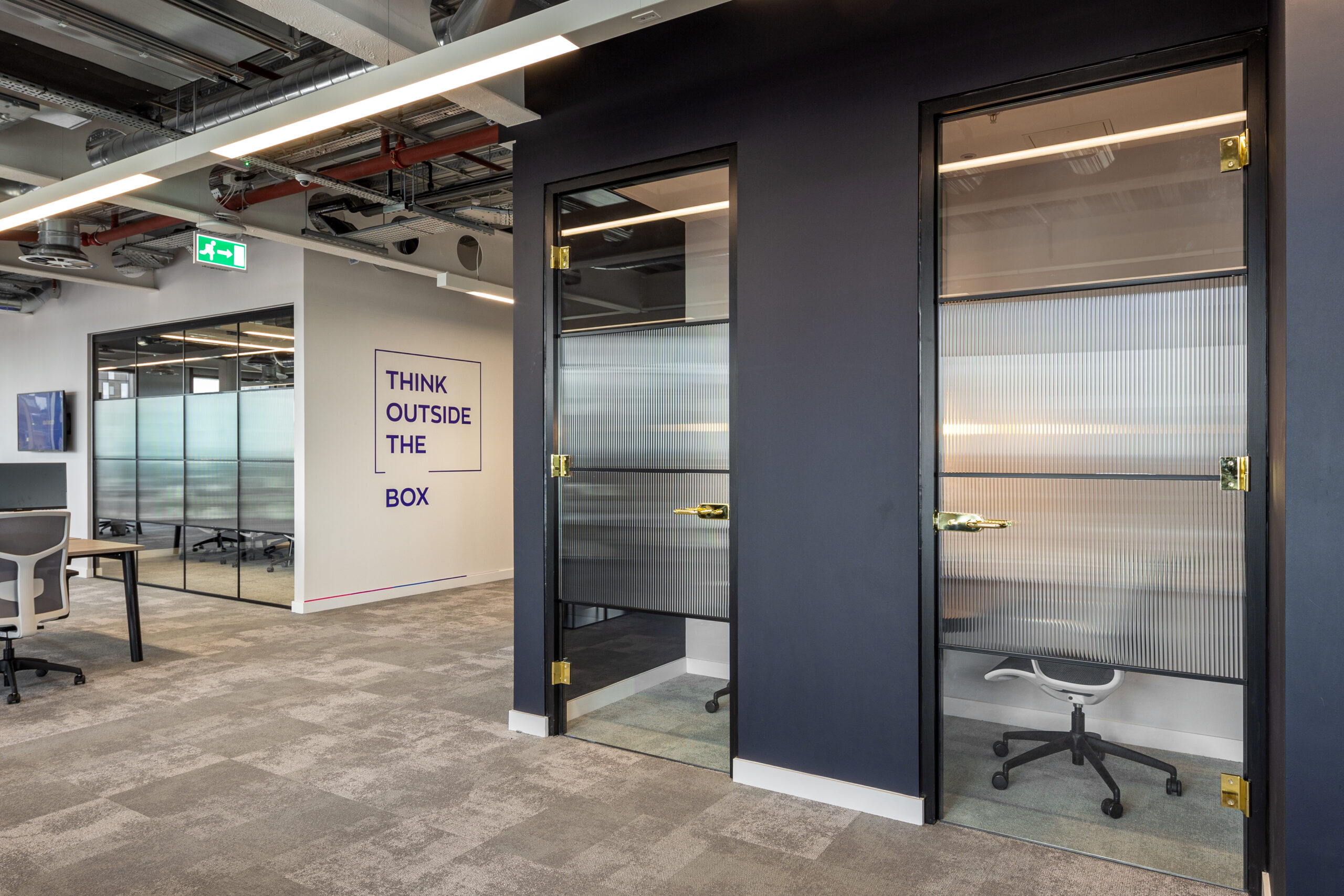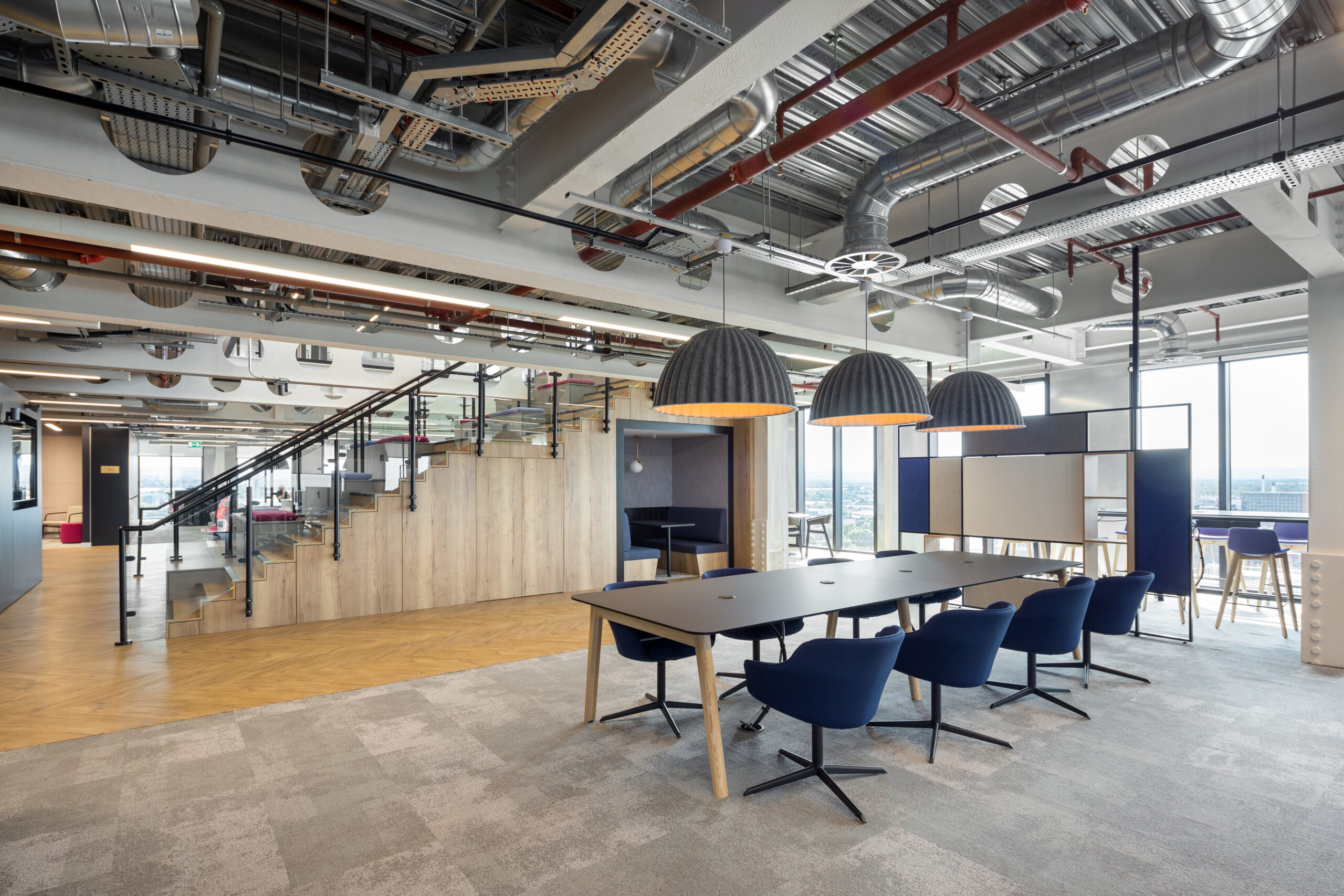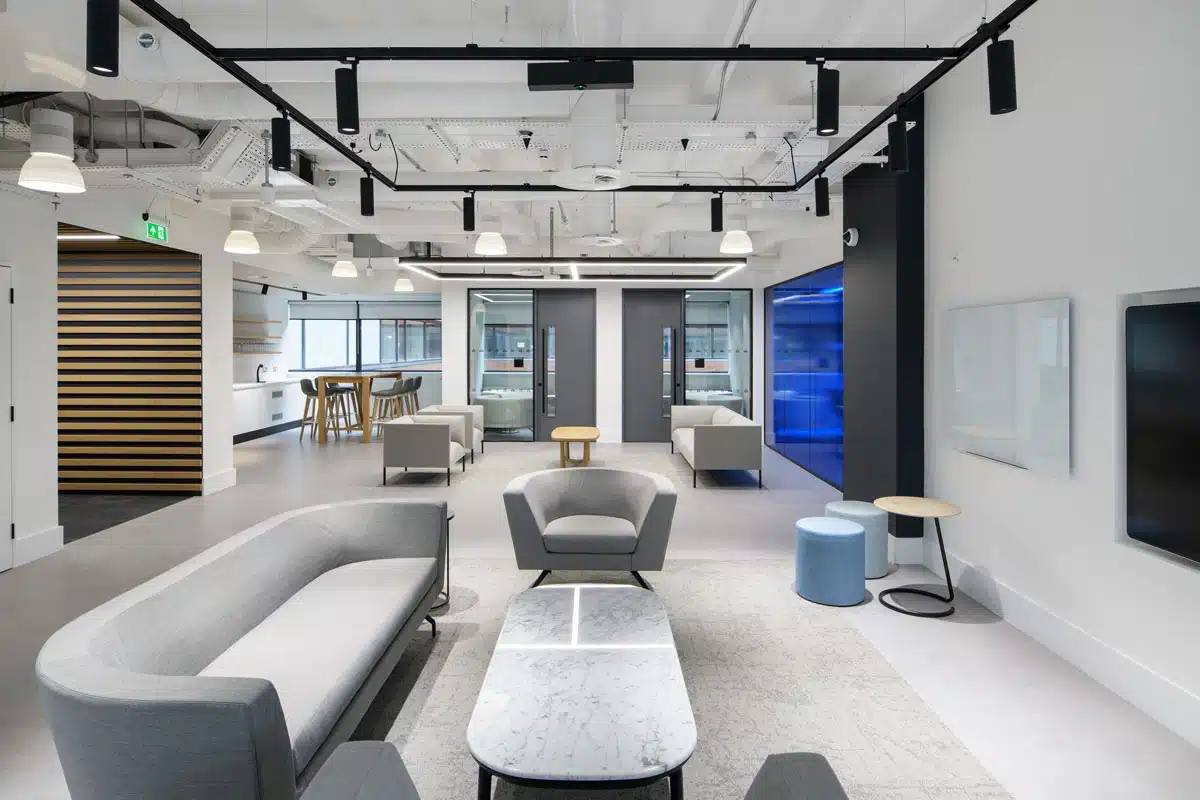
Company office design is no longer just about making a space look modern. Instead, it should help your business perform. It should reinforce your culture, support productivity, and stay flexible as teams grow and working patterns change. ADT Workplace approaches office design as a strategic process, because the best results come from clarity, collaboration and smart planning.
Below, we break down what effective company office design looks like, and how to plan a workspace that supports people and long-term business goals.
Start with outcomes, not aesthetics
A strong office design starts with the right questions. What is the workspace meant to achieve? For example, you might need to improve collaboration, support focused work, or create a better client experience.
At ADT Workplace, the early stage typically focuses on briefing and consultancy. This is where goals, budget and programme are clarified, and where you align the space with how your team works.
When you define outcomes early, design decisions become easier. Therefore, you avoid features that look impressive but do not support day-to-day work.
Design around culture and brand identity
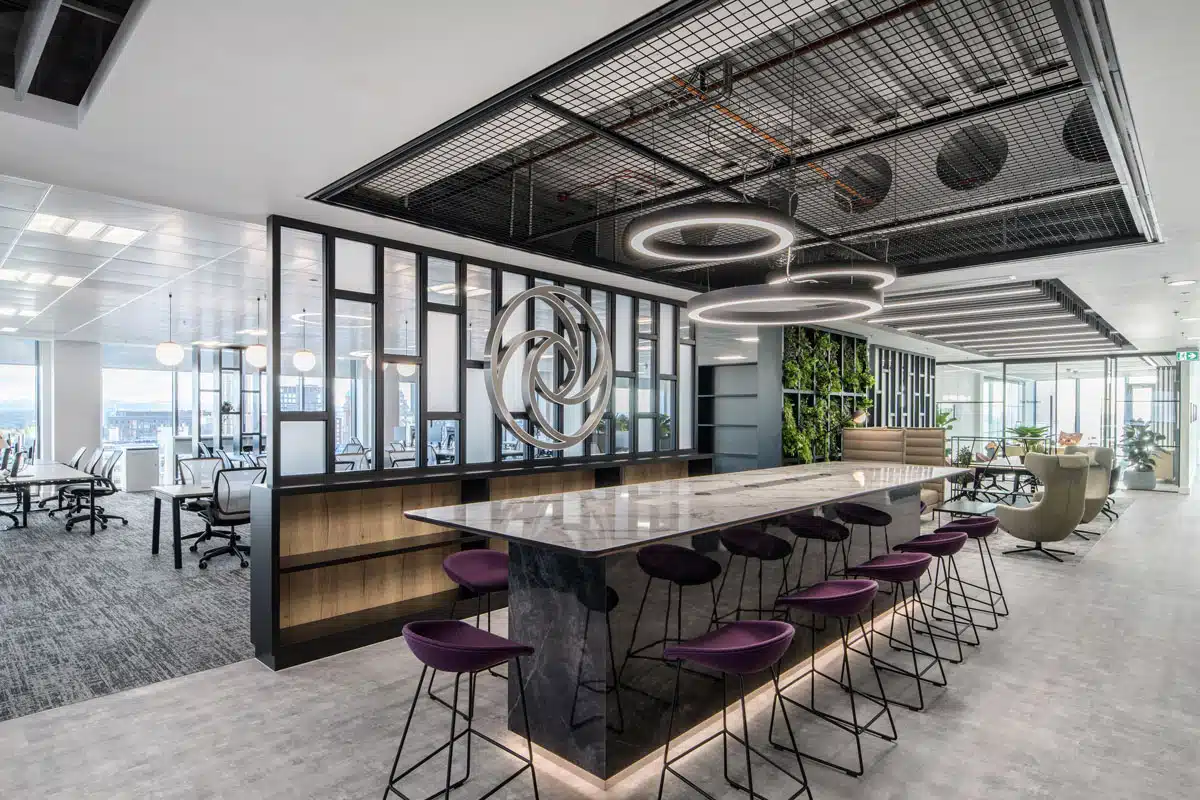
Your office is a physical expression of your culture. So, it should communicate your values through layout, materials, and the overall experience people have when they arrive.
Brand expression does not have to mean bold graphics everywhere. However, it should feel intentional. For instance, you can reflect brand personality with colour accents, signage, materials, lighting, and the tone of collaborative areas versus quieter settings.
If your culture is highly social, you may prioritise communal zones and open collaboration. Meanwhile, if you are more process-driven, you may need clearer zoning, structured meeting spaces, and calmer finishes.
Plan zoning to balance collaboration and focus
Modern teams need different settings throughout the day. As a result, company office design works best when it includes a mix of zones, not one dominant layout style.
Office design can directly influence focus and decision-making. Elements like acoustics, lighting, technology and spatial planning all affect how people process information and stay productive.
Consider building your layout around:
- Quiet areas for deep focus and confidential calls
- Collaboration spaces for project work and informal catch-ups
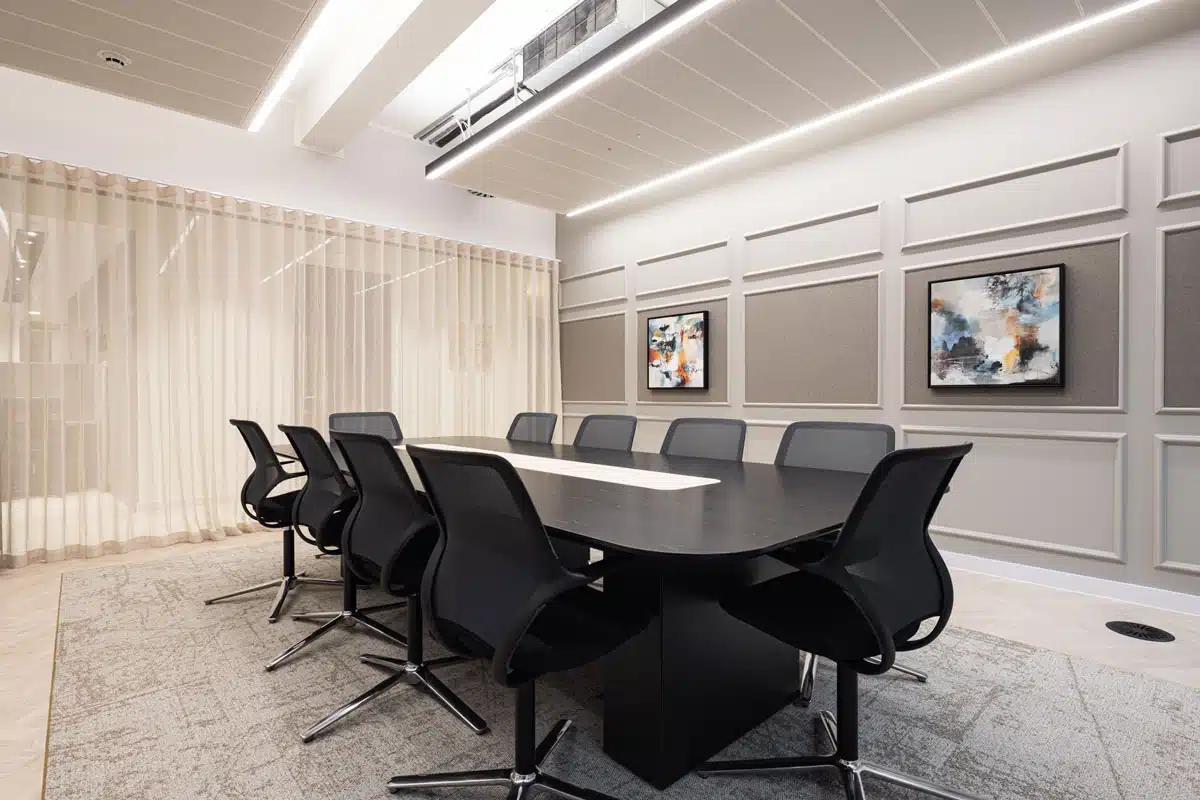
- Meeting rooms that match real demand, including smaller rooms
- Social spaces that support culture and connection
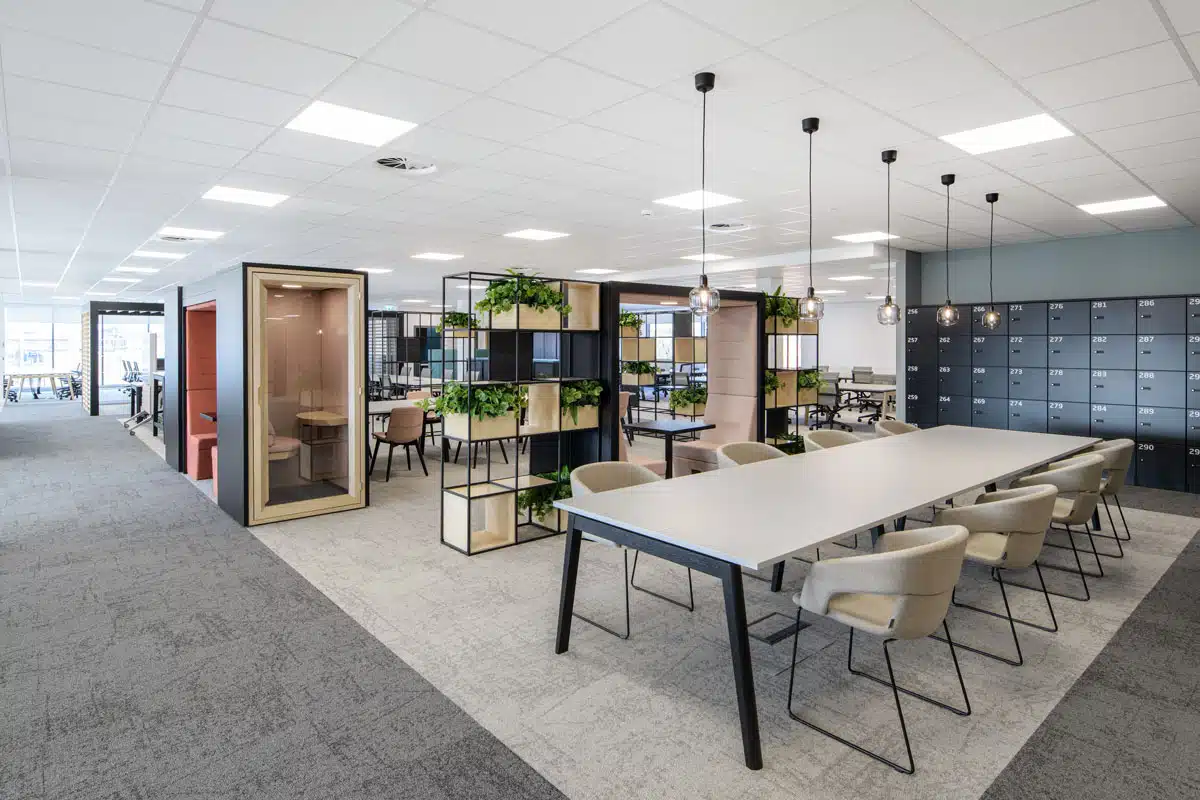
- Support spaces like storage, print, lockers and wellness areas
Importantly, transitions between zones matter. So, think about what sits next to what. Place active areas away from focus zones, and use acoustic measures to reduce distraction.
Support hybrid working with flexible settings
Hybrid working has made flexibility essential. Instead of designing for a fixed headcount, many companies now design for peaks, movement, and varied workstyles.
ADT Workplace often highlights the value of developing a strong brief that considers how people work, and then designing an environment that supports that reality.
In practical terms, flexibility can include:
- Bookable rooms and pods for private work
- Agile meeting spaces that can expand or divide
- Modular furniture for reconfigurable layouts
- Technology that supports smooth video calls in shared areas
This approach helps the office stay useful, even as teams and ways of working evolve.
Build in wellbeing, comfort and sustainability
A workspace should help people feel better at work, not just perform tasks. Therefore, wellbeing should be designed in from the start, not added at the end.
ADT Workplace’s wellbeing content highlights how comfort, air quality, lighting and acoustics affect workplace experience.
Alongside wellbeing, sustainability is increasingly a business requirement. In addition to environmental benefits, efficient choices can reduce running costs over time. Materials, lighting, and lifecycle value all matter here.
Design for scalability and future growth
Growth changes how a space is used. Teams expand, departments shift, and new functions appear. So, company office design should allow for change without major disruption.
Plan for growth by:
- Keeping layouts adaptable, with furniture that can move
- Designing meeting rooms to be rebalanced later
- Allowing space for future storage, tech, or new teams
- Creating multi-purpose areas that can change function
When flexibility is built in, you reduce the need for frequent redesigns. As a result, the office remains a long-term asset.
What working with ADT Workplace looks like
A successful project is structured, but it also needs collaboration. ADT Workplace sets out a clear journey from brief through to design and delivery, helping businesses plan with confidence and reduce last-minute surprises.
If you are planning a new company office design, the best next step is to define the brief clearly, and then explore how the design can support your culture, focus, wellbeing and growth.