Today’s workplaces are more diverse than ever. With four generations—Baby Boomers, Gen X, Millennials, and Gen Z—working side by side, businesses face new challenges in creating office environments that meet a wide range of needs. Each generation has its own preferences, work styles, and expectations, making inclusive and adaptable design essential.
In this article, we explore how to design offices that cater to all generations, ensuring everyone feels valued, supported, and productive.
Understanding the Needs of Each Generation
Before designing a workspace for all, it’s crucial to understand what each generation values.
- Baby Boomers (born 1946–1964) often prefer private spaces, clear structure, and ergonomic support. Many value face-to-face interaction and quiet zones for focus.
- Gen X (born 1965–1980) appreciate flexibility and independence. They’re tech-savvy but also value a healthy work-life balance, often favouring hybrid or agile setups.
- Millennials (born 1981–1996) thrive in collaborative, open environments. They favour tech-integrated spaces, strong company culture, and wellness initiatives.
- Gen Z (born 1997–2012) are digital natives who value creativity, sustainability, and personalisation. They expect workplaces to reflect modern values, including diversity, inclusion, and flexibility.
Understanding these generational traits helps inform thoughtful workspace decisions.
Design Principles for Multigenerational Offices
1. Offer a Range of Work Settings
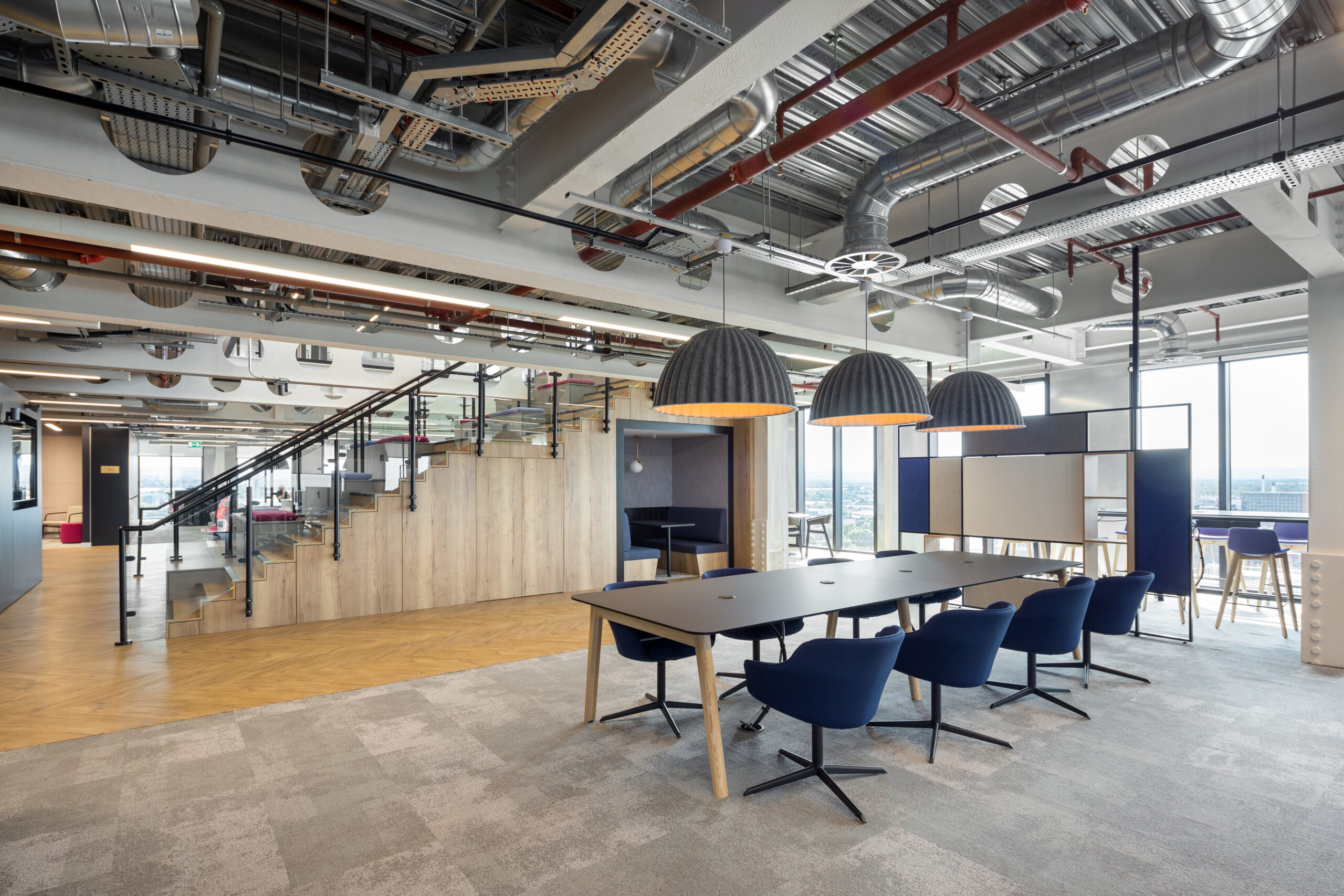
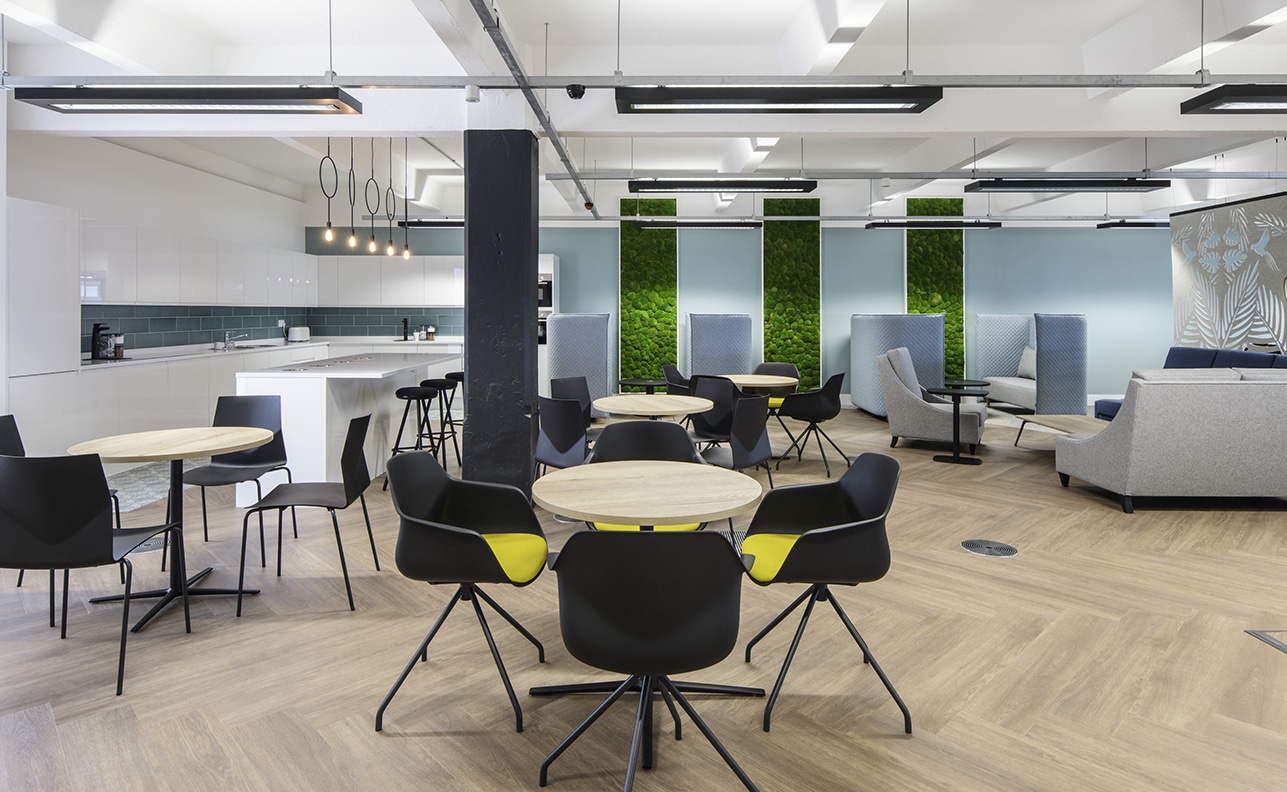
Rather than adopting a one-size-fits-all approach, incorporate various zones:
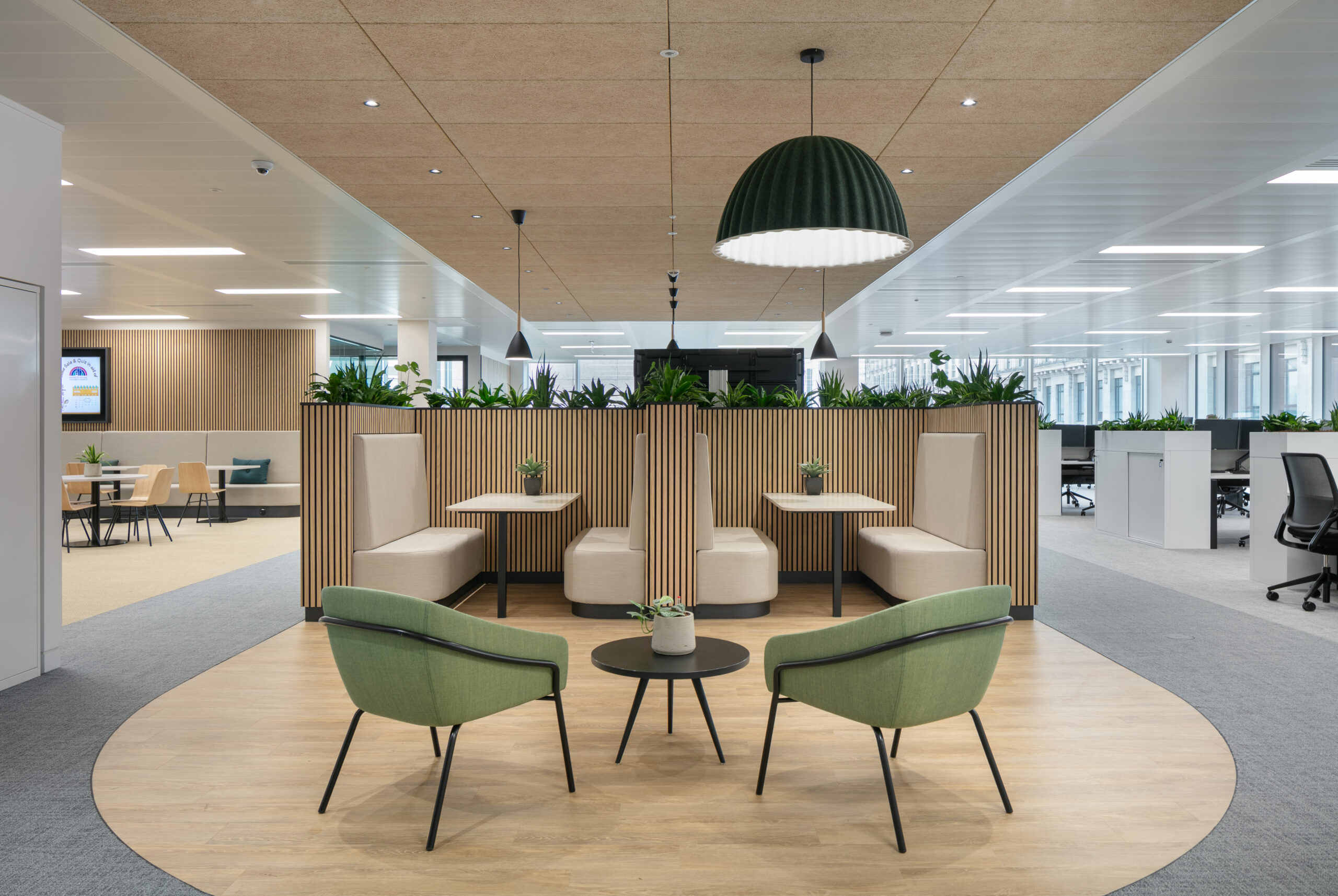
- Quiet areas or private offices for focused work and privacy.
- Open-plan collaboration spaces for teamwork and brainstorming.
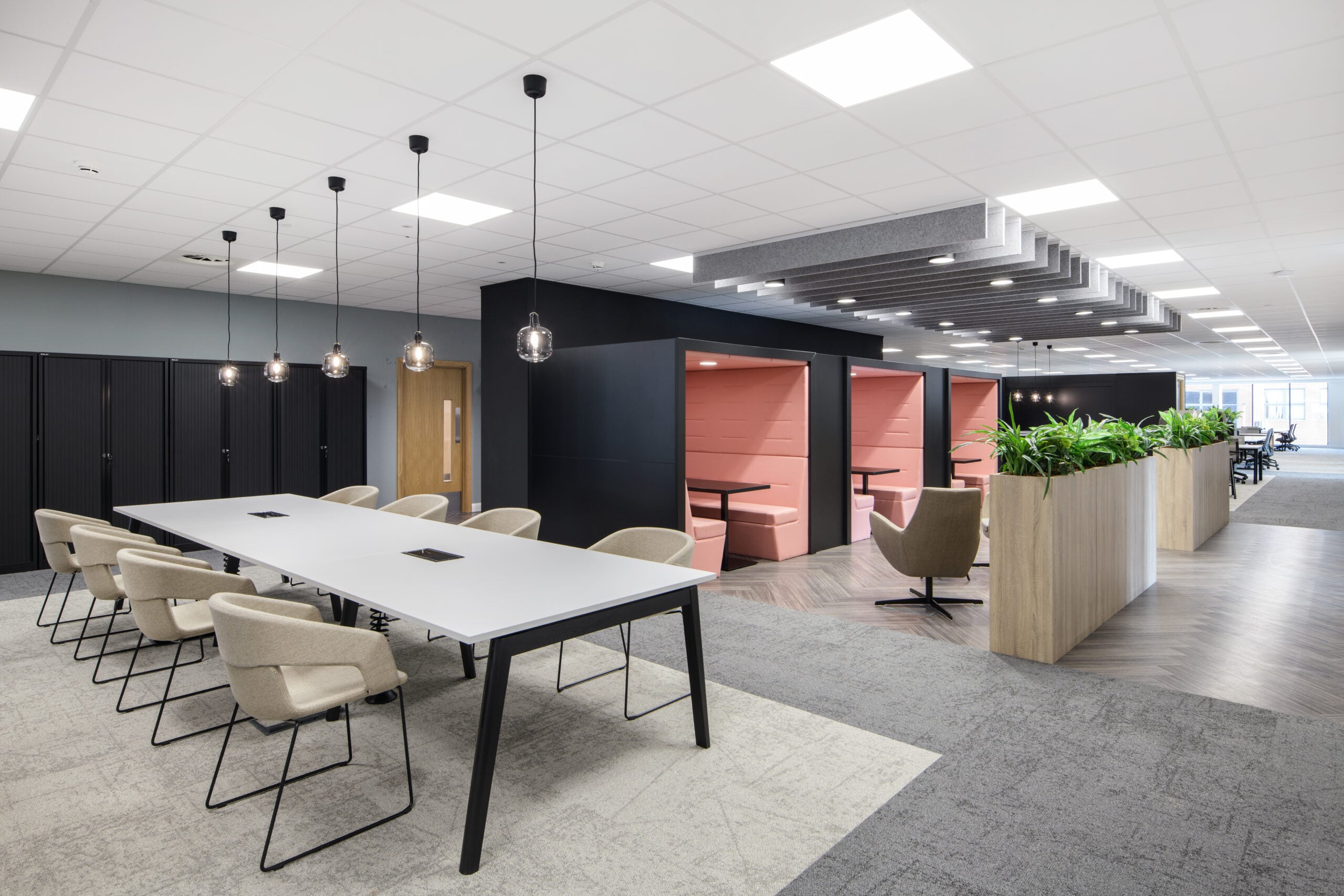
- Informal lounges and touchdown spots for casual use and remote workers.
- Bookable meeting rooms with varying tech setups to suit different levels of digital confidence.
This variety empowers employees to choose spaces that suit their daily tasks and preferences.
2. Prioritise Flexibility and Adaptability
Furniture that can be moved or reconfigured supports a changing workforce. Modular desks, adjustable chairs, and hot-desking setups allow the office to evolve with business needs and personal preferences.
Additionally, flexible layouts support hybrid working models, which are increasingly popular across generations.
3. Integrate Technology Seamlessly
Modern tech is a non-negotiable, but its implementation should be intuitive. Equip meeting rooms with user-friendly AV systems, provide strong Wi-Fi throughout, and offer digital booking tools for desks and rooms.
While Gen Z and Millennials may take to new systems quickly, make sure support is available for less tech-confident users, often among older employees.
4. Create Spaces That Support Wellbeing
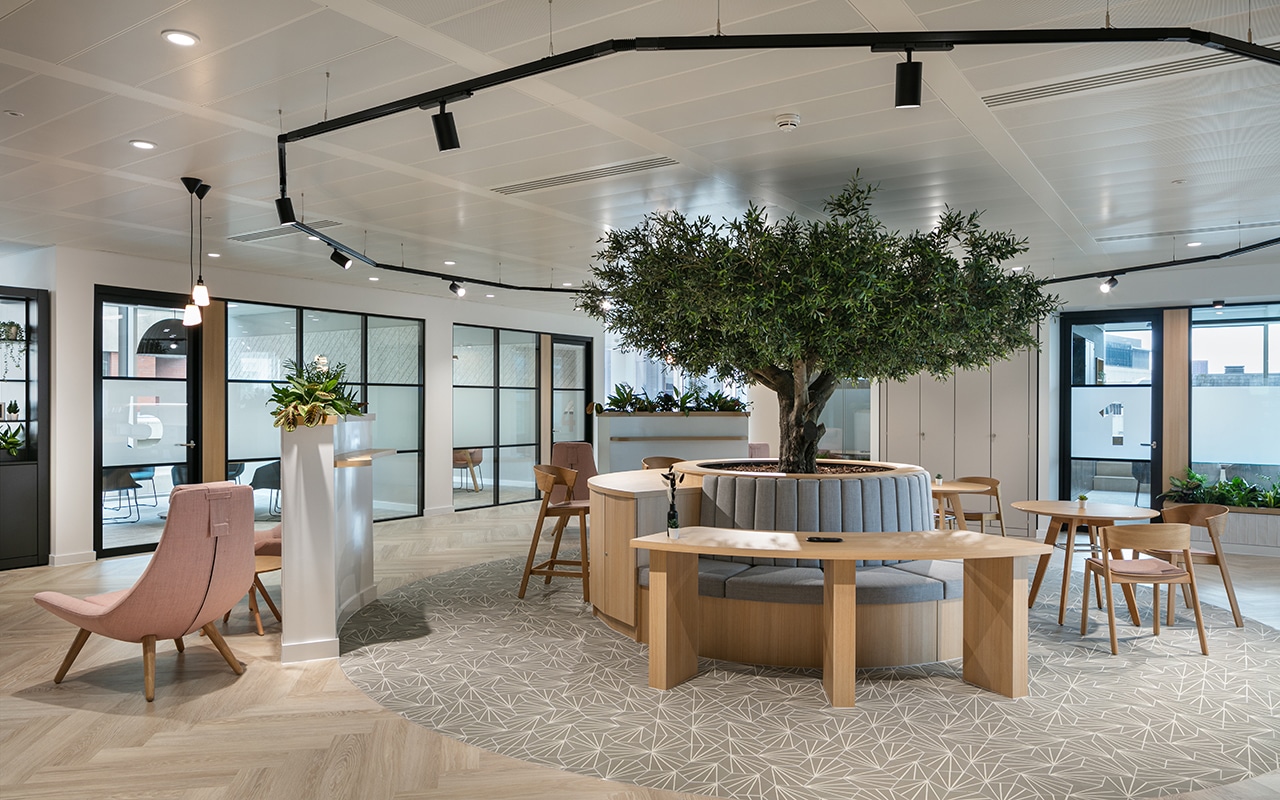
Wellbeing should be central to office design. Natural light, biophilic elements, and comfortable acoustic design benefit all age groups. Add wellness rooms, sit-stand desks, and breakout areas to encourage movement and mental breaks.
Generational wellbeing needs may differ, but universal design elements help bridge the gap.
5. Celebrate Diversity and Inclusion
The physical environment should reflect inclusive values. Use artwork, branding, and messaging that reflects generational diversity and company culture. Inclusive signage, accessible design features, and consideration for neurodiverse employees show that every individual matters.
This is especially valued by younger generations and contributes to a positive workplace culture for all.
6. Support Learning and Mentorship

Designing for the Future Workforce
Conclusion
Designing offices for cross-generational workforces is not about meeting every individual need, but creating a balanced environment that supports flexibility, inclusivity, and wellbeing. By offering a variety of work settings, integrating user-friendly technology, and focusing on both collaboration and quiet zones, businesses can foster a thriving multigenerational culture.
At ADT Workplace, we help create spaces where every generation can thrive. If you’re planning a new office or refurbishment, get in touch to start building a workplace for the future.