

Workplace design & build is no longer just about creating an attractive office. Instead, it is about delivering a workspace that supports the way your business operates today, while staying flexible for tomorrow. When strategy, design and delivery sit within one connected workflow, the brief stays intact. As a result, decisions are made faster, costs are easier to control, and the finished workplace performs better.
Even so, many office projects still follow a split approach. Strategy is agreed with one party, design is developed elsewhere, and delivery is then handed to a separate contractor. Consequently, the original intent can fade as the programme progresses. Budgets begin to drift, compromises appear late, and teams end up reacting rather than leading. Workplace design & build resolves this by aligning every stage from day one, so the outcome matches the goals that prompted the move in the first place.
Start with workplace strategy, not finishes
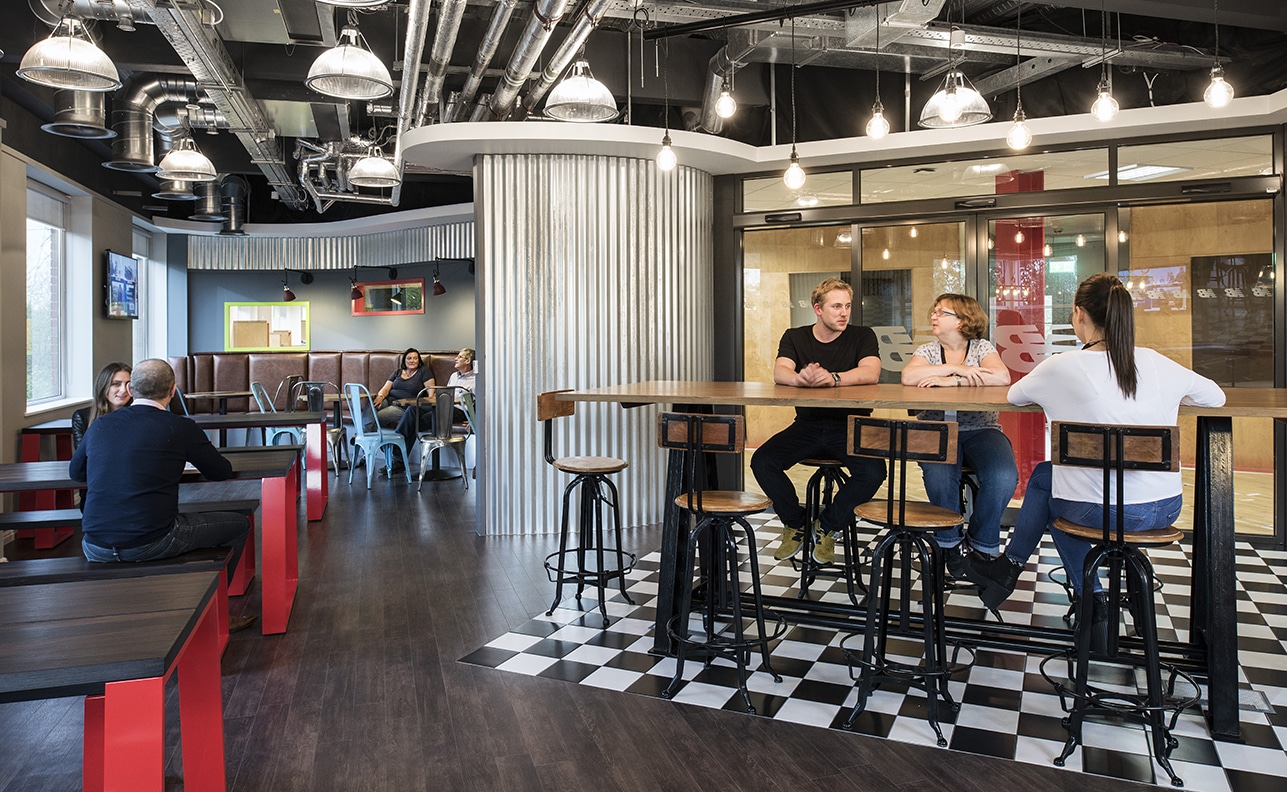
A high-performing workplace begins with a clear brief. Therefore, workplace consultancy should come before choices about colours, furniture, or feature lighting. Strategy turns business objectives into practical requirements, and it creates a shared definition of success. That means exploring how teams collaborate across the week, what hybrid working looks like in reality, and where focus or confidentiality is essential. At the same time, it sets expectations around growth, visitor experience and brand perception, so design decisions are made with purpose.
Importantly, strategy also uncovers constraints early. These can include landlord requirements, building services limitations, or compliance needs. Because those factors are identified at the start, the design can develop with fewer surprises. In turn, this reduces late-stage redesign and helps keep the programme moving.
Translate business goals into design that works
Once the strategy is defined, interior design becomes more than a visual exercise. It becomes a way to support daily performance. Aesthetics still matter, of course, because the workplace must feel aligned with your organisation and culture. However, design needs to work as hard as it looks good. That is why space planning, zoning and adjacencies should be driven by how people actually work, rather than by trends or assumptions.
A strong design solution considers the full experience of the office. It plans for collaboration without sacrificing focus, and it creates logical transitions between active and quieter zones. It also considers acoustics, privacy and lighting early, because these elements have a direct impact on comfort and productivity. In addition, material choices should balance visual quality with durability, maintenance and lifecycle value. When design is developed alongside the build team, the detail is more achievable, and the finish quality is easier to protect on site.
Just as importantly, design should support inclusion. Different roles, working styles and access needs should be considered from the outset, rather than being treated as late additions. When the design and build process is integrated, these requirements are easier to coordinate and deliver consistently across the space.
Integrate delivery for certainty and control
Workplace design & build works best when responsibility is clear. With one integrated team coordinating design, procurement and construction delivery, the project gains pace and predictability. Because the people shaping the design also understand buildability, specifications are developed with realism. As a result, cost planning is more accurate, lead times are managed earlier, and the risk of disruptive variations reduces.
This joined-up approach also supports better quality control. Many fit-out issues happen in the gaps between teams, particularly where details require close coordination, such as flooring transitions, bespoke joinery, M&E integration and branded elements. When those packages are managed through one workflow, you reduce the chances of rework and ensure the finished space reflects the intended standard.
Balance sustainability with commercial realities
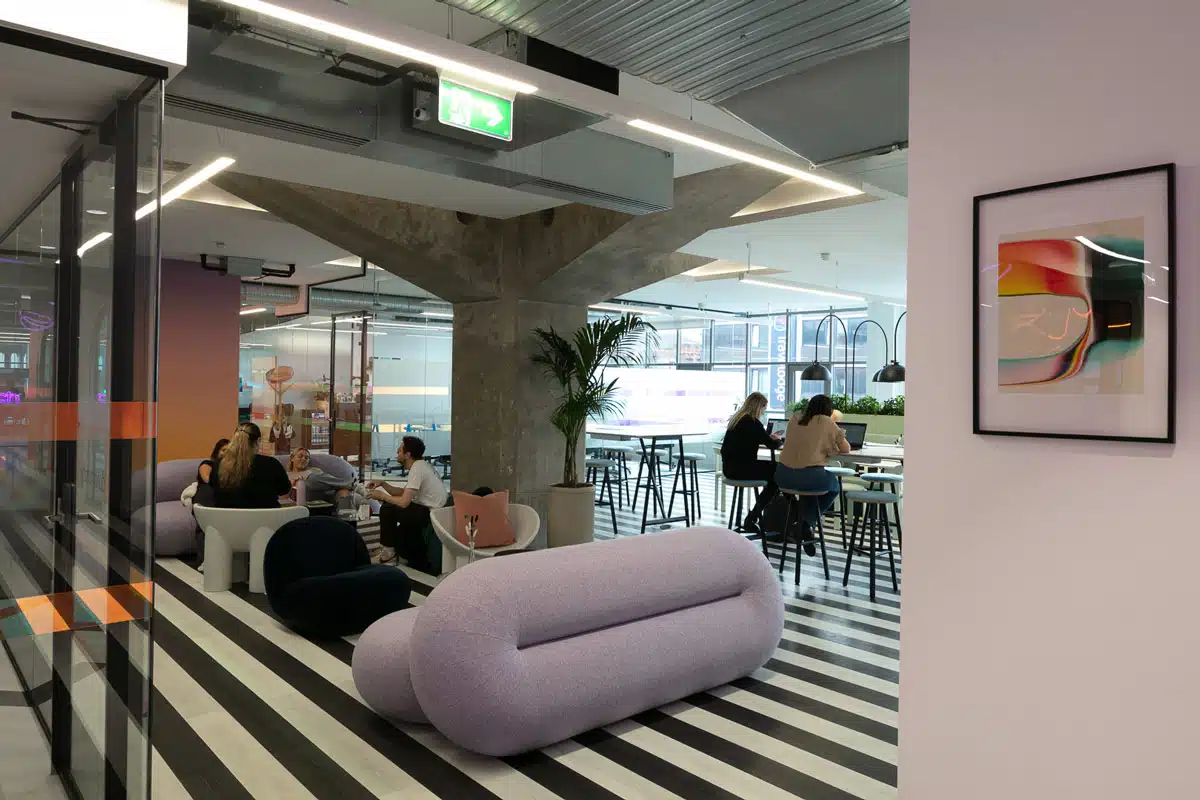
Sustainability is now a core expectation for many organisations, yet it still needs to align with budget, programme and operational needs. The advantage of an integrated model is that sustainability decisions are made early, when they can have the greatest impact. That might involve choosing materials with a lower environmental footprint, planning for reuse where suitable, improving lighting efficiency, or reducing waste through smarter procurement. If you are targeting recognised sustainability outcomes, early coordination makes it easier to align design intent with measurable delivery.
Moreover, sustainability is not only about the initial build. It is also about how the workplace performs over time. When services, controls and layouts are planned properly, the space can operate more efficiently, while staying adaptable as teams and work patterns change.
Design for wellbeing and performance, not trends
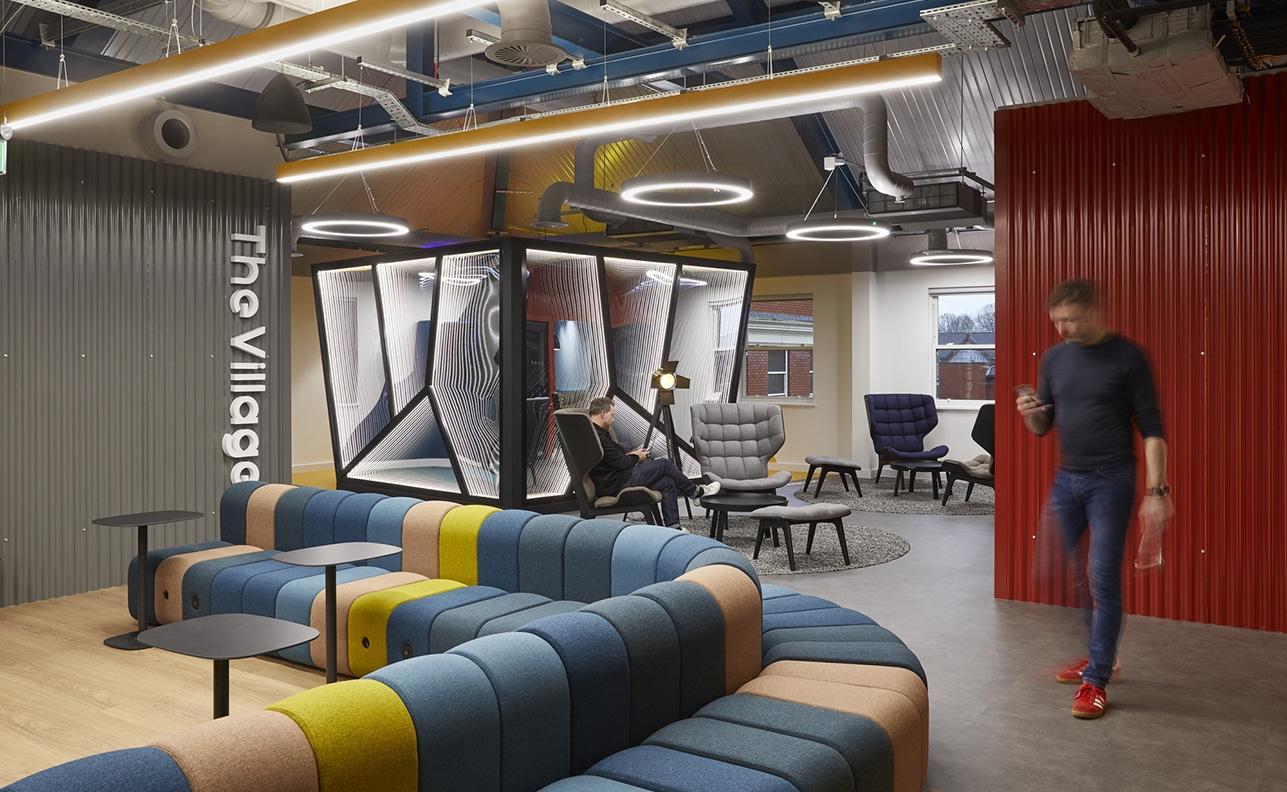
Performance is not a vague ambition. It shows up in comfort, focus, engagement and how smoothly work happens day to day. Therefore, wellbeing should be built into the fundamentals. Good air quality, effective temperature control and well-planned lighting can have a bigger impact than any feature wall. After that, layout and zoning shape behaviour. A space that offers a clear mix of collaborative settings, private areas and informal touch-down points supports choice and reduces friction between working styles.
In addition, workplaces should support healthy routines. That can mean encouraging movement through layout planning, creating breakout areas that allow genuine mental reset, and using acoustics to reduce stress in busy zones. When these details are planned strategically, they support productivity without feeling forced.
Protect the brand experience throughout the project
Brand is not just a logo applied at the end. Instead, it is the experience people have as they move through the space. That begins at arrival, continues through meeting areas, and extends into everyday settings where teams spend most of their time. When brand is considered early, the workplace can reflect identity through layout, tone, materials and messaging, rather than relying on surface-level graphics alone.
However, brand should never reduce usability. A successful workplace balances identity with clarity, comfort and practicality. In other words, the office should feel like your business, while still being easy to navigate and easy to work within.
Measure success after handover
Bringing it all together
Workplace design & build is about alignment. When strategy defines the brief, design translates it into a workplace that supports real behaviours, and delivery protects the intent through to completion, the results are stronger. Ultimately, businesses achieve a space that looks right, works hard, and supports long-term performance.
If you are planning a fit-out or refurbishment, ADT Workplace can guide the process from early workplace strategy through to integrated design and delivery, ensuring every decision supports the outcome you need.
More News and Insights

OFFICE SPACE PLANNING: HOW TO GET MORE FROM YOUR WORKPLACE


THE HIDDEN JOURNEY: HOW PEOPLE MOVE THROUGH OFFICE SPACES

WHAT MAKES A GOOD OFFICE DESIGN? KEY PRINCIPLES EXPLAINED