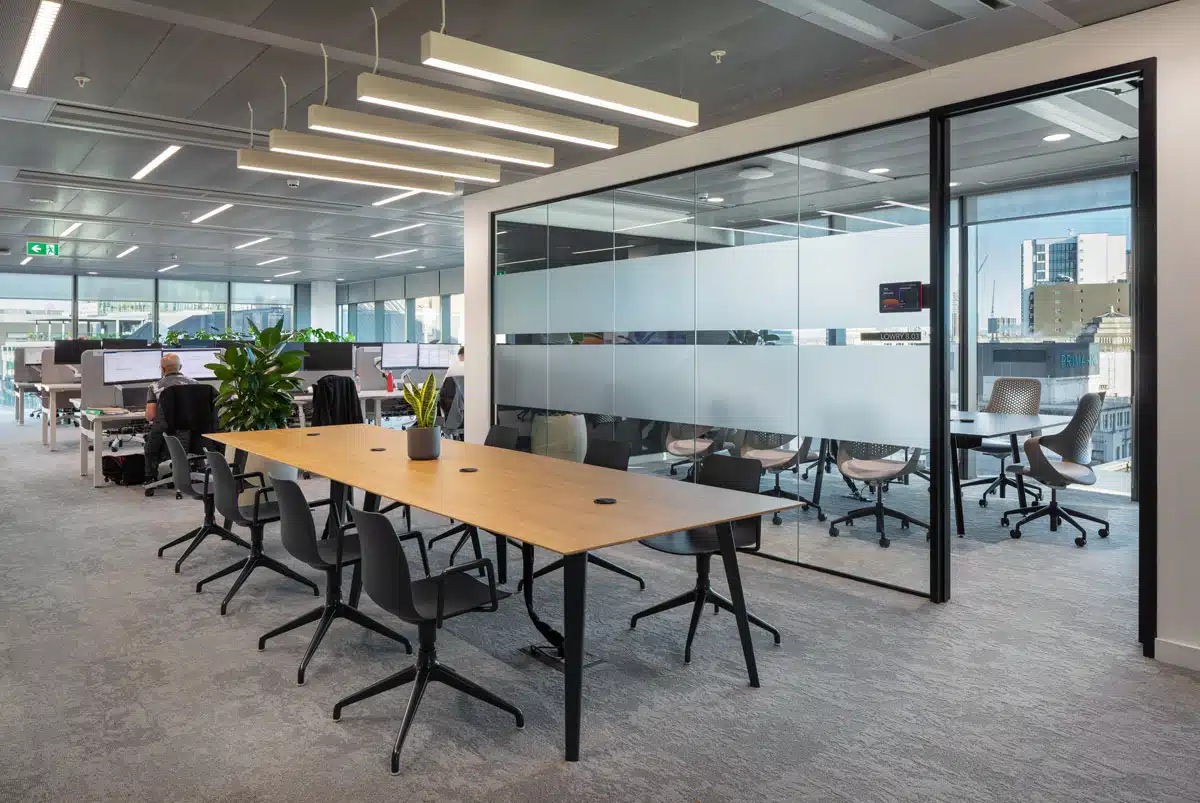
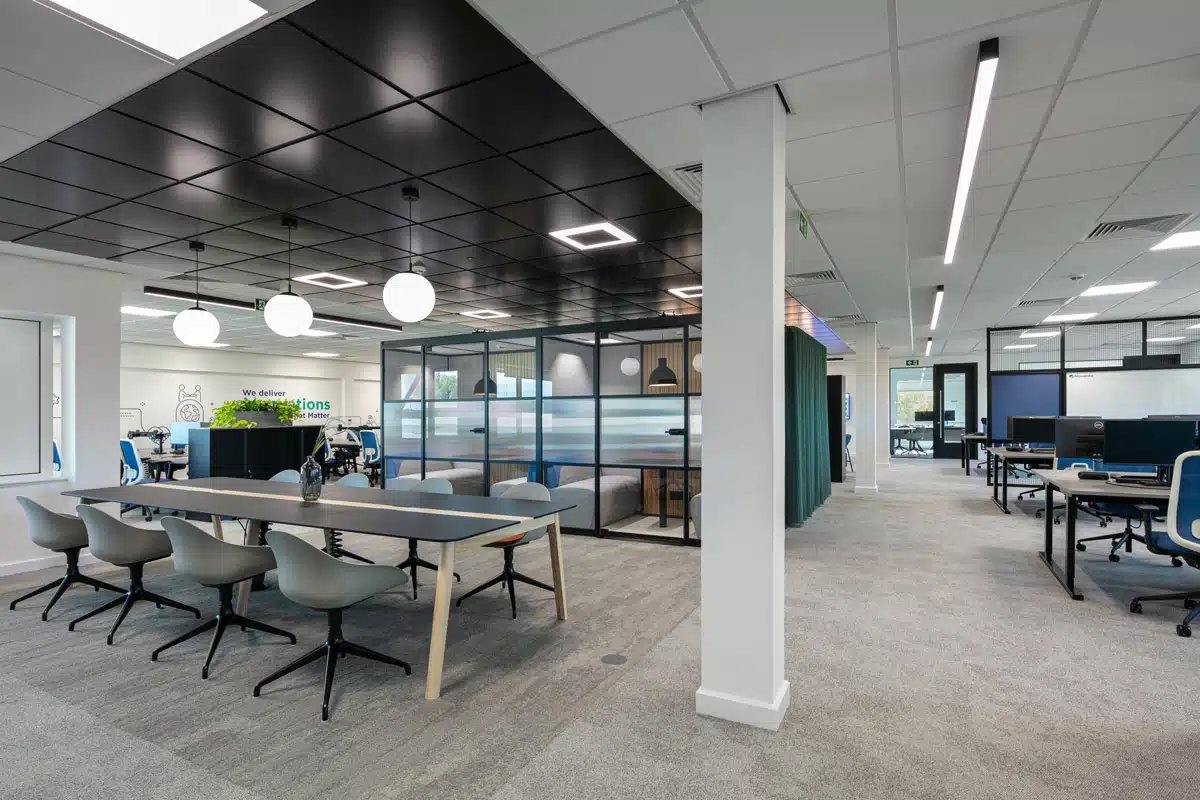
Open plan office design is still one of the most requested workplace formats. It can feel open, bright, and connected. Moreover, it can make space work harder for growing teams. However, it can also create noise, distraction, and privacy worries if the layout is not planned properly.

An effective open plan office layout is not “one big room”. Instead, it is a structured space with clear zones, sensible adjacencies, and practical acoustic control. That is how you keep collaboration strong while protecting focused work. 

What is open plan office design?

In simple terms, open plan office design uses minimal fixed barriers between workstations. So, people work in a shared environment rather than enclosed offices or rows of cubicles. The goal is better interaction and flexibility. Yet the best schemes still include quieter areas and private spaces.

Open plan layouts are not new either. For example, early open workplaces appeared in the early 1900s. Later, they evolved as organisations chased efficiency and changing ways of working. 

Benefits of an open plan office layout

When it is designed well, open plan can deliver clear advantages.

Better day to day collaboration

Teams can communicate quickly. As a result, ideas move faster and problems get solved sooner.

Improved space efficiency

Open plan layouts often use floorplates more efficiently. Therefore, businesses can fit more people into the same footprint, without wasting space on corridors and cellular rooms.

Flexibility as teams change

Open plan spaces are easier to reconfigure. In addition, modular furniture and adaptable settings can support project work, growth, and hybrid patterns. 

More natural light and a modern feel

Open areas often allow daylight to travel further across the floor. Consequently, the workspace can feel brighter and more welcoming.

Common problems with open plan offices

Open plan can also fail, and usually for predictable reasons.

Noise and distraction

With many people nearby, calls and conversations can interrupt concentration. Therefore, productivity can dip for focused tasks.

Lack of privacy

Confidential work, sensitive calls, and deep focus are harder without dedicated settings. Additionally, some people feel exposed in fully open environments.

Overcrowding and inclusion challenges

If density is pushed too far, open plan can feel intense. For some employees, that creates stress and reduces comfort at work. 

The takeaway is simple. Open plan works best when you design for different work modes, not just desk count.

Design strategy 1: Zone the floor, then plan adjacencies

Zoning is the fastest way to make open plan feel calm. First, split the office into activity zones. For example: collaboration, quiet focus, touchdown, and social space. Then, plan what sits next to what.

As a rule, keep louder functions away from focus areas. Put collaboration settings near teams that use them most. Meanwhile, place quiet zones deeper into the plan, or behind softer separators. You can define zones using planting, storage, changes in flooring, or partial screens. 

Design strategy 2: Treat acoustics as part of the layout

Acoustics should be planned early, not added later. Start with surfaces. Soft flooring, acoustic panels, and upholstered elements help absorb sound. In addition, consider dedicated phone areas, so calls do not spill into desk space.

Furniture also plays a part. High backed seating and enclosed booths can dampen noise while still feeling open. Consequently, you reduce distraction without rebuilding walls. 

Design strategy 3: Build privacy back in, without losing openness

Open plan does not mean zero private space. Instead, add a mix of settings:

  • phone booths for quick calls
  • small rooms for confidential chats
  • quiet pods for deep work
  • meeting rooms sized to real demand

This variety supports different roles and personalities. It also reduces the pressure on desks to do every job. 

Design strategy 4: Use flexible furniture to support hybrid working

Hybrid work changes how people use the office. So, layouts need choice. Provide touchdown points, shared project tables, and bookable spaces. Also, use desks and storage that can shift as teams evolve.

When furniture is planned around real behaviours, the office feels intuitive. As a result, teams collaborate naturally, yet focus is still protected.

A simple checklist for an open plan office that performs

Before you commit to an open plan office layout, sense check the plan:

  • Have you defined work zones clearly?
  • Are noisy activities separated from focus work?
  • Do you have enough private settings for calls and sensitive tasks?
  • Are acoustics designed in, not bolted on?
  • Can the layout adapt as headcount and hybrid patterns shift? 

How ADT Workplace approaches open plan office design

At ADT Workplace, open plan design starts with how your teams actually work. Then, we shape a layout that supports collaboration, protects focus, and uses the floorplate efficiently. We also design in zoning, acoustics, and privacy options, so the office performs day after day.

If you are reviewing your current layout, or planning a new space, an evidence led approach makes the difference. It turns open plan into a balanced workplace, rather than a noisy compromise.

More News and Insights

open plan office design
OPEN PLAN OFFICE DESIGN: BALANCING COLLABORATION AND FOCUS
Plan an open plan office layout that supports teamwork and focus. Practical tips on zoning, acoustics, privacy and flexibility.
BREEAM certification xandwhy
WHAT AGILE WORKING MEANS FOR YOUR OFFICE DESIGN
Learn the agile working meaning, how agile workspaces support hybrid teams, and what design features make agility work in practice.
office revamp Freetrade Exchange
WHAT WORKPLACE DESIGN CONSULTANTS DO AND WHY THEY MATTER
Learn what workplace design consultants do, when to hire one, and how consultancy improves space, culture and performance.